



Every year, thousands of immigration applicants challenge visa refusals in the Federal Court of Canada. These cases involve visitor visa refusals, study permit refusals, work permit refusals, permanent residence refusals, sponsorship refusals, and many other immigration decisions made by Immigration, Refugees and Citizenship Canada (IRCC).
For many applicants, filing an application for judicial review in the Federal Court represents their last opportunity to challenge an unfair or unreasonable decision. The stakes are often extremely high. A refusal can separate families, disrupt educational plans, prevent business opportunities, and create significant emotional and financial hardship.
Unfortunately, a growing problem has emerged within the immigration industry.
Many applicants are filing Federal Court cases through agents, consultants, overseas representatives, or other intermediaries without ever speaking directly to the lawyer who is supposed to be representing them. In some situations, clients do not know the lawyer’s name, do not know the law firm’s name, have never spoken to counsel, and are entirely dependent upon a middleman to relay information.
This raises serious concerns about transparency, accountability, communication, and the quality of legal representation.
This article explains why every immigration applicant should know exactly who their lawyer is, why direct communication with counsel matters, and how members of the public can independently verify who is representing them in the Federal Court of Canada.
The Growing Role of Middlemen in Immigration Litigation
The Canadian immigration industry has become increasingly global.
Many applicants residing outside Canada first encounter immigration services through:
- Overseas immigration consultants
- Visa agents
- Educational recruiters
- Migration agencies
- Travel agents
- Foreign representatives
- Referral networks
Many of these individuals provide valuable services. However, problems arise when the relationship between the client and the lawyer becomes obscured.
In some situations:
- The client never receives a retainer agreement directly from the lawyer.
- The client never speaks with the lawyer.
- The client communicates only with an agent.
- The lawyer receives instructions indirectly.
- Important information is filtered through multiple people.
- The client has no idea who is making legal decisions in the case.
When a Federal Court application is filed under these circumstances, the client may not fully understand who is responsible for advancing the litigation.
Why This Matters
Federal Court litigation is not a routine administrative process.
It is a legal proceeding before a superior court of record.
The lawyer representing the applicant may be required to:
- Review the refusal decision.
- Analyze the certified tribunal record.
- Identify legal errors.
- Draft legal arguments.
- Negotiate with government counsel.
- Prepare affidavits.
- Attend case management proceedings.
- Conduct settlement discussions.
- Appear before a Federal Court judge.
These are legal services requiring professional judgment.
If communication between the lawyer and client is interrupted by multiple intermediaries, important facts can be lost.
Even small misunderstandings can significantly affect the outcome of a case.
The Lawyer’s Duty Is Owed to the Client
One of the most important principles in Canadian legal ethics is that a lawyer’s professional obligations are owed to the client.
Not to:
- A referral source.
- A consultant.
- An immigration agent.
- A family friend.
- A business associate.
- A recruiter.
The lawyer’s duty is owed directly to the person whose rights are at stake.
This duty includes:
Loyalty
The lawyer must act in the client’s best interests.
Competence
The lawyer must provide competent legal representation.
Confidentiality
The lawyer must protect confidential information.
Communication
The lawyer must keep the client informed.
Candour
The lawyer must provide honest advice.
When a client has no direct contact with counsel, it becomes more difficult to ensure these professional obligations are being fulfilled effectively.
A Real Problem: Clients Who Do Not Know Their Lawyer
It may seem surprising, but many immigration applicants cannot answer a simple question:
“Who is your lawyer?”
Some applicants respond:
- “My consultant is handling everything.”
- “An agent in my country hired a lawyer.”
- “I don’t know the lawyer’s name.”
- “I have never spoken with the lawyer.”
- “The consultant told me not to contact the lawyer directly.”
These situations should raise immediate concerns.
If your future in Canada depends upon a Federal Court proceeding, you should know:
- The lawyer’s full name.
- The law firm’s name.
- The lawyer’s contact information.
- The status of your case.
- The legal strategy being pursued.
A client should never feel disconnected from their own litigation.
The Risks of Indirect Communication
Risk 1: Important Facts Never Reach Counsel
Lawyers rely on facts.
If relevant information is not communicated directly, legal arguments may be incomplete.
For example:
- Updated employment records.
- New travel history.
- Family circumstances.
- Medical issues.
- Documentary evidence.
If these facts never reach the lawyer, opportunities may be lost.
Risk 2: Delayed Communication
Federal Court litigation operates under strict deadlines.
A delay of even a few days can become significant.
When communication passes through multiple intermediaries, unnecessary delays often occur.
Risk 3: Conflicting Instructions
Sometimes different individuals provide inconsistent instructions.
This can create confusion regarding:
- Settlement positions.
- Litigation strategy.
- Evidence.
- Client objectives.
Direct communication helps reduce these risks.
Risk 4: Lack of Accountability
When the client never communicates directly with counsel, it may become difficult to determine:
- Who made decisions.
- Who approved filings.
- Who provided advice.
Transparency benefits everyone involved.
How To Verify Who Is Representing You in Federal Court
Many applicants do not realize that Federal Court records are publicly searchable.
The Federal Court provides an online Court Files database that allows individuals to search many court proceedings.
This means applicants can independently verify who is listed as counsel of record.
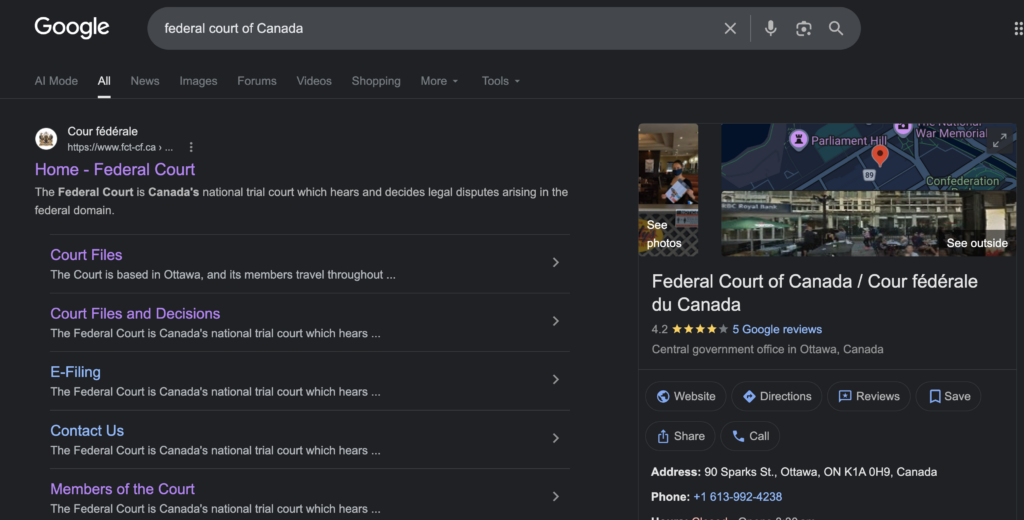
Step 1
Visit the Federal Court of Canada website.
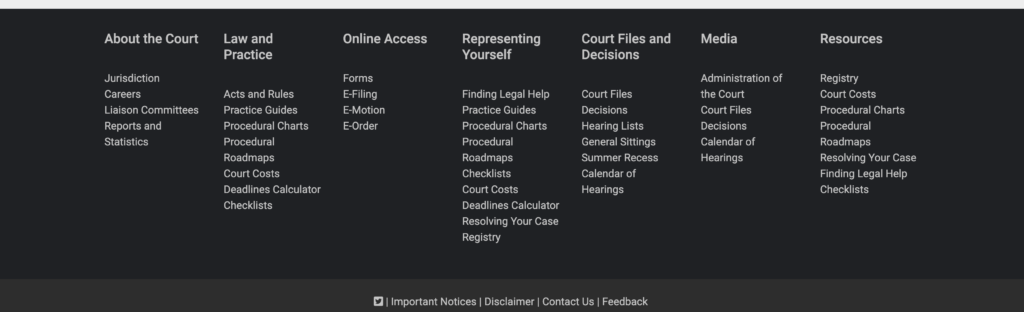
Step 2
Navigate to the Court Files section.
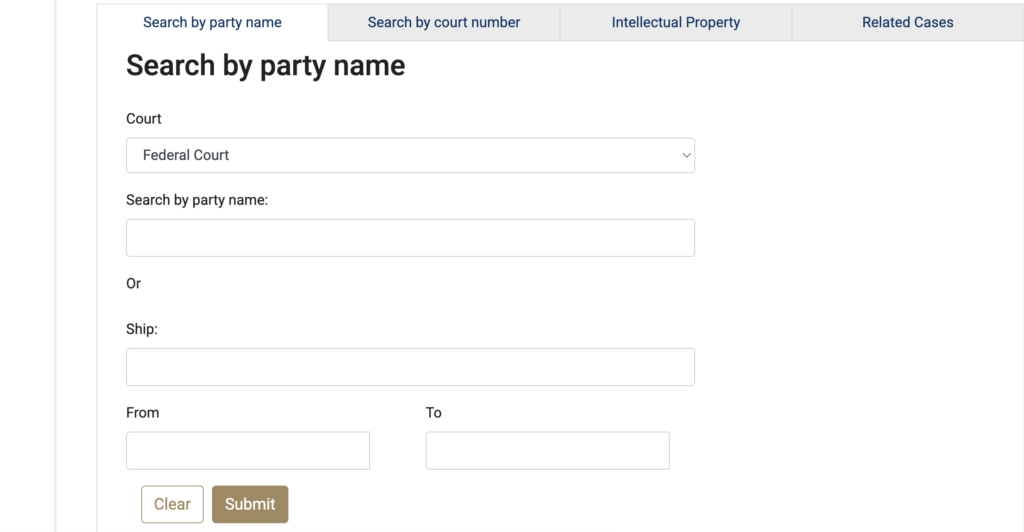
Step 3
Search by:
• Court file number, or
• Party name.
Step 4
Locate your case.
Step 5
Open the case details.
Step 6
Select the section labeled “Parties.”
Step 7
Review the counsel information listed.
You can typically identify:
- The law firm.
- The lawyer.
- Contact information.
- Counsel appearing on the record.
This allows applicants to independently confirm who is representing them.
Why Every Client Should Review Their Own Court File
Reviewing your court file provides several benefits.
Transparency
You gain a better understanding of the litigation.
Accuracy
You can ensure information is correct.
Confidence
You know exactly who is responsible for the case.
Communication
You can establish a direct professional relationship with counsel.
The court file belongs to your case. You have every reason to understand what is happening in your own proceeding.
Direct Access Leads to Better Representation
The strongest lawyer-client relationships are built on direct communication.
Clients should feel comfortable discussing:
- Concerns.
- Questions.
- Deadlines.
- Strategy.
- Settlement opportunities.
- Risks.
A lawyer who understands the client’s objectives can often provide more effective representation.
When information passes through multiple layers, the quality of communication may suffer.
Direct communication helps ensure that instructions are received accurately and that the lawyer fully understands the client’s circumstances.
What Questions Should You Ask Your Lawyer?
Every Federal Court litigant should consider asking:
- What is the current status of my case?
- What are the upcoming deadlines?
- What legal issues have been identified?
- What documents have been filed?
- What are the possible outcomes?
- Has the Department of Justice indicated any settlement position?
- What are the strengths and weaknesses of my case?
These are reasonable questions.
A client should not feel hesitant about understanding their own litigation.
Public Interest and Consumer Awareness
The purpose of this discussion is not to criticize all consultants, agents, or referral sources.
Many professionals provide valuable assistance to immigration applicants.
However, public awareness is essential.
Every immigration applicant should understand that when a matter reaches the Federal Court, legal representation becomes critically important.
The individual whose future is at stake should know exactly who their lawyer is and should have the ability to communicate directly with counsel.
The ultimate objective must always be the client’s best interests.
No intermediary should stand between a client and meaningful communication with the lawyer responsible for protecting their legal rights.
Frequently Asked Questions
Can an immigration consultant represent me in Federal Court?
No. Federal Court litigation involves legal proceedings before the court. Applicants should ensure they understand who their lawyer is and who is officially representing them in the case.
How can I find out who is representing me in my Federal Court case?
Applicants can review their Federal Court file through the Court Files section of the Federal Court of Canada website. The court record typically identifies the lawyer and law firm appearing on the record.
Should I communicate directly with my lawyer during a Federal Court case?
Direct communication helps ensure that important information, instructions, and updates are communicated accurately. It also allows clients to better understand the status and strategy of their case.
What are the risks of relying solely on an agent or middleman?
Important facts, documents, or instructions may not be communicated accurately or promptly. Delays, misunderstandings, and reduced transparency can affect the handling of a case.
What information should I know about my lawyer?
Applicants should know their lawyer’s full name, law firm, contact information, and role in the case. They should also feel comfortable asking questions about deadlines, filings, and possible outcomes.
Why is direct access to legal counsel important in immigration litigation?
Federal Court proceedings involve legal analysis, strategic decision-making, and strict deadlines. Direct communication helps lawyers fully understand a client’s circumstances and provide informed legal advice throughout the process.