

Family reunification is not just a moral principle—it is a core value embedded in Canadian immigration law. Yet, every day, genuine families are separated because of unreasonable visitor visa refusals based on vague, inconsistent, and often unfair reasoning.
This is the story of a devoted mother of two international students in Canada—and how Fateh Law Corporation fought for her rights when the system failed her.
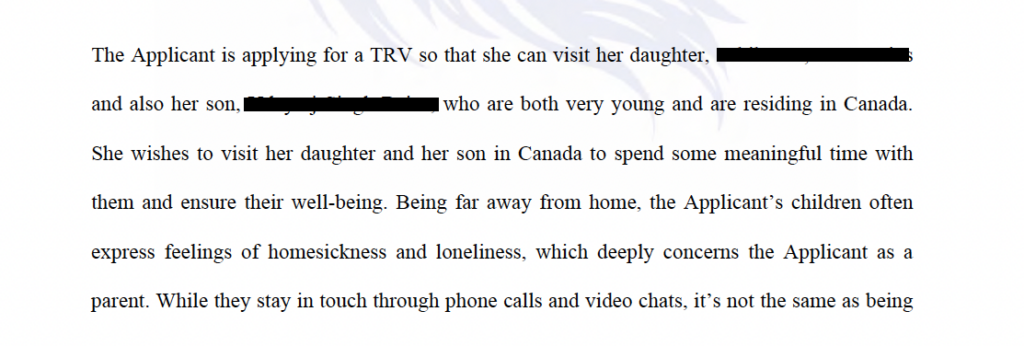
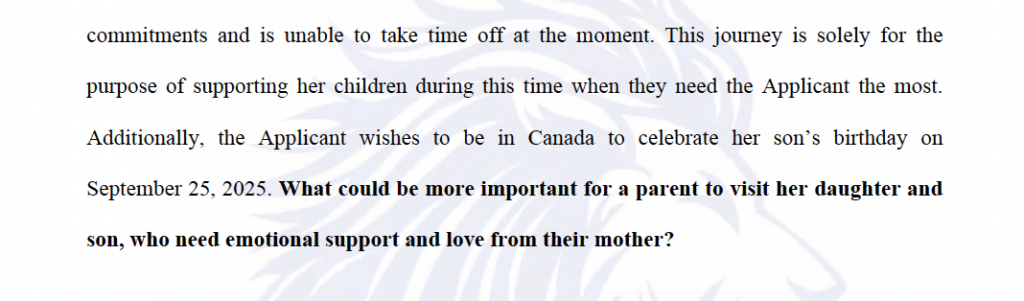
A Mother’s Simple Wish: To Visit Her Children
Our client is a mother whose two children are studying in Canada as international students. Like many parents, she made enormous financial sacrifices to support their education, believing that their future would be brighter.
She had no intention of overstaying.
She had no hidden agenda.
She only wanted to visit her children—to be there for them emotionally, mentally, and physically.
International students often struggle with:
- Loneliness
- Homesickness
- Mental health challenges
- Cultural isolation
- Academic pressure
And in moments of medical emergencies, family presence becomes invaluable.
Yet, despite all of this, her visitor visa application was repeatedly refused.
The Refusal: “Purpose of Visit” and “Financial Situation”
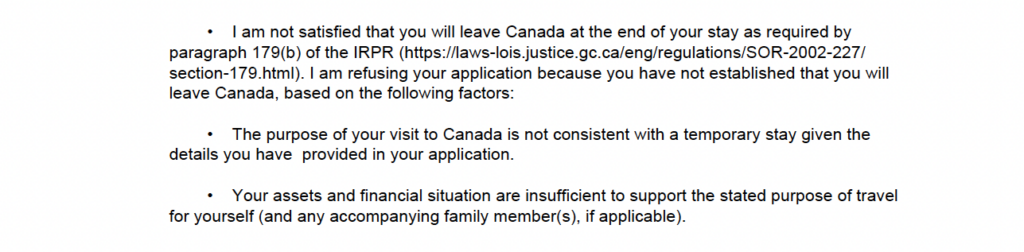
The refusal reasons were familiar—and deeply troubling.
The officer claimed:
- Her purpose of visit was not genuine
- Her financial situation and assets were insufficient
But the reality was very different.
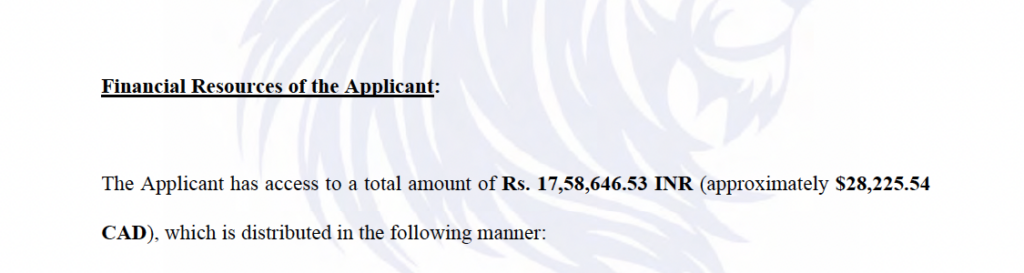
She had ₹17.5 lakhs in savings, which is approximately CAD $28,000—a substantial amount for a short-term visit. She had funded her children’s education. She had deep roots in her home country. She had no history of overstaying anywhere.
Still, she was refused.
Again.
And again.
This is where many applicants give up.
She didn’t.
Why These Refusals Are Often Legally Wrong
Canadian immigration law is not meant to punish genuine families because of the actions of a few bad actors.
Yes, some people overstay.
Yes, some misuse visitor visas.
But that does not mean every parent, every spouse, and every grandparent should be judged with suspicion.
This kind of reasoning violates the principle of individualized assessment—a cornerstone of administrative fairness in Canadian law.
Under the Immigration and Refugee Protection Act (IRPA), family reunification is a fundamental objective of the legislation. Officers are required to assess each case fairly, reasonably, and based on evidence—not assumptions.
How Fateh Law Corporation Intervened
When this client came to us, we knew this case was not just emotional—it was legally strong.
We prepared:
- Detailed legal submissions
- A sworn Canadian affidavit
- Evidence-based arguments addressing every refusal point
- Jurisprudence supporting family reunification principles
We did not simply “reapply.”
We built a litigation strategy.
Because when an officer refuses to act reasonably, the only remedy left is accountability through the Federal Court of Canada.
Taking the Fight to Federal Court
We filed a judicial review in the Federal Court of Canada.
This forced the government to justify the refusal—not to us, but to the Department of Justice.
And that is when things changed.
After reviewing our arguments, the Department of Justice agreed that the refusal could not stand.
On December 30, 2025, they extended a settlement offer, agreeing to set aside the refusal and send the file for redetermination by a new officer.
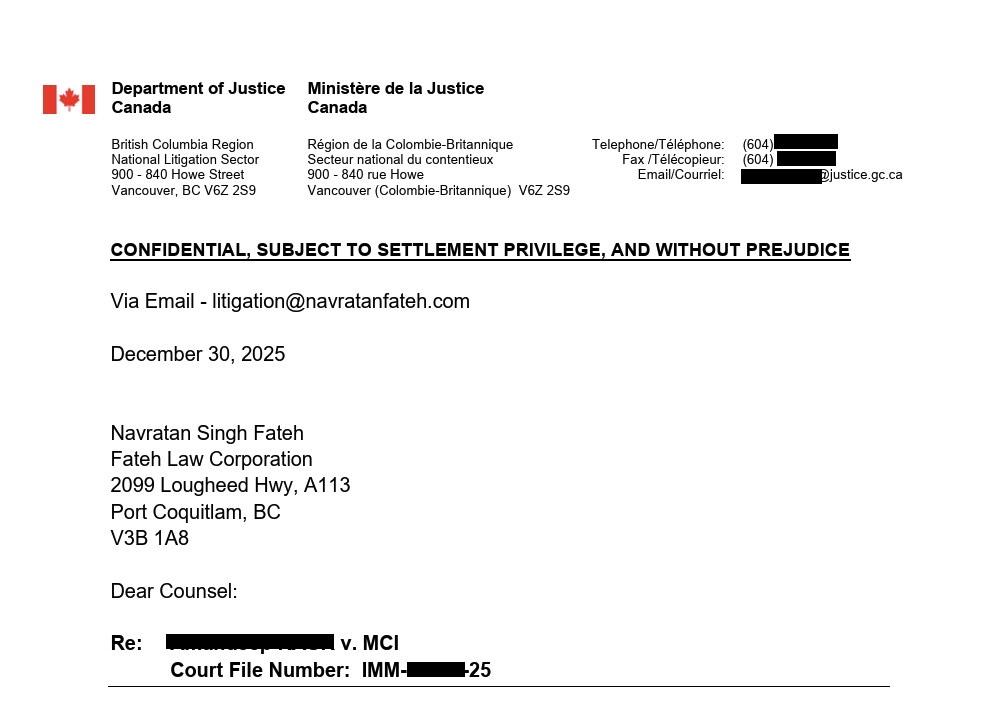 This is not just a procedural step.
It is an admission that the decision was flawed.
What Does Redetermination Mean?
A redetermination means:
- The old refusal is cancelled
- A new officer must reassess the case
- The new officer must consider the evidence fairly
- The legal errors must be corrected
We are hopeful that this mother will finally be able to visit her children in Canada—without being treated as a risk simply for being a parent.
Why This Case Matters
This case is not unique.
We see this pattern every single day:
- Parents refused despite strong finances
- Spouses refused despite genuine relationships
- Families separated for years
- Officers using boilerplate refusal language
- Evidence ignored
- Context dismissed
These are not just administrative errors.
They destroy families.
And they must be challenged.
Why Hiring a Canadian Lawyer Makes a Difference
Most people don’t realize this:
When you go to the Federal Court, you cannot add new evidence.
The Court only looks at what the officer had when they made the decision.
That means your initial application must be legally structured from the beginning.
At Fateh Law Corporation, we:
- Draft sworn affidavits
- Prepare legal submissions
- Cite relevant case law
- Anticipate refusal logic
- Build litigation-ready files
- Challenge unreasonable decisions in court
We don’t just apply.
We advocate.
We Fight for Families
Family reunification is not a privilege.
It is a right protected by law.
If your visitor visa has been refused for:
- Purpose of visit
- Financial reasons
- Ties to home country
- Immigration intent
- Travel history
- Vague credibility concerns
You may have legal grounds to challenge that decision.
Fateh Law Corporation: Litigation-Focused Immigration Law
We are not a form-filling agency.
We are Canadian barristers and solicitors with over 12 years of litigation experience, focusing on:
- Federal Court Judicial Reviews
- Mandamus Applications
- Wrongful Refusal Challenges
- Redetermination Settlements
- Family Reunification Cases
- Complex Visa Refusals
When immigration decisions become unreasonable, we take them to court.
Don’t Let an Unfair Refusal Define Your Future
This mother’s case shows one thing clearly:
Refusal is not the end.
It is often the beginning of a legal fight.
And sometimes, justice wins.
If you or your loved ones are facing repeated refusals, delays, or unfair decisions, do not suffer in silence.
📞 Book a consultation with Fateh Law Corporation
📍 Offices in Canada and India
⚖️ Federal Court Representation
💼 Litigation-Focused Strategy
We fight for families.
We fight for fairness.
We fight for you.