

A Fateh Law Corporation Success Story
At Fateh Law Corporation, we believe Canadian immigration law is not meant to permanently punish people for a single, long‑past mistake. The law recognizes growth, rehabilitation, and fairness. Yet, too often, applicants and families are separated for years because of minor historical offences that are misunderstood, misapplied, or unfairly weighed.
This blog tells the story of a real client whose life was placed on hold for over a decade due to a single shoplifting incident in the United States in 2012—and how careful legal strategy, strong evidence, and a principled understanding of Canadian immigration law finally reunited him with his wife in Canada.
More importantly, this article explains how deemed rehabilitation works, why many applications fail, and how the right legal representation can change the outcome.
The Human Cost of Old Criminal Inadmissibility
Canadian immigration decisions are not abstract exercises. Behind every refusal is a family waiting, a marriage strained by distance, and years of emotional and financial hardship.
Our client’s story is a powerful example.
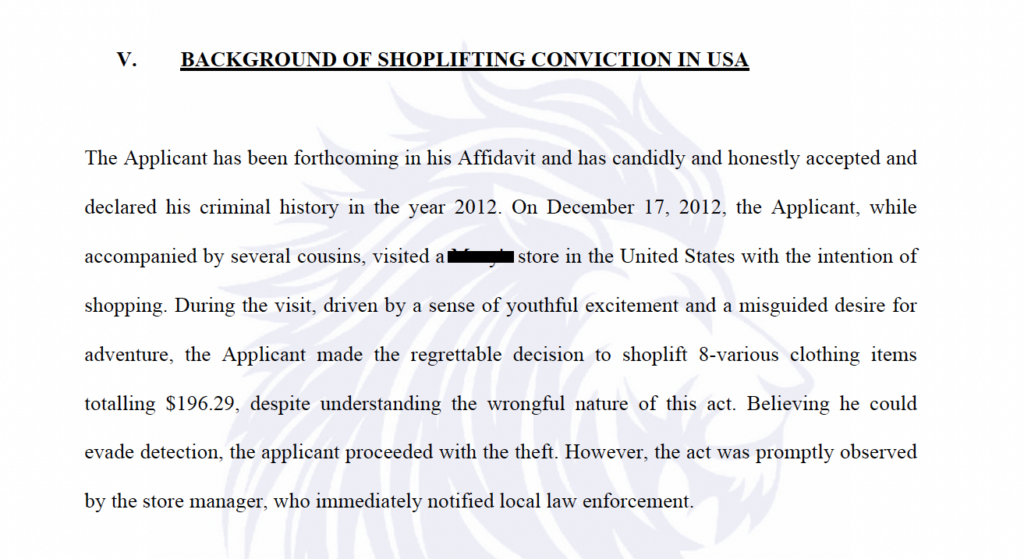
Over thirteen years ago, while young and immature, he committed a minor shoplifting offence in the United States. The incident involved eight clothing items worth approximately $196. There was no violence, no weapons, no organized criminality, and—most importantly—no repeat offences. It was a one‑time lapse in judgment fueled by youthful impulsiveness.
 Yet that moment followed him relentlessly.
Every Canadian immigration application was shadowed by the same question: Is he criminally inadmissible?
Despite a clean record since 2012, stable employment, a genuine marriage, and a law‑abiding life, his spousal visa applications were repeatedly refused. The consequence was devastating: he could not reunite with his wife in Canada.
This is where many applicants lose hope. But the law offered a solution—one that required precision, experience, and courage to argue properly.
Understanding Criminal Inadmissibility in Canadian Immigration
Criminal inadmissibility is one of the most misunderstood areas of Canadian immigration law. Many applicants believe that any criminal record automatically bars them from Canada forever. This is simply not true.
Under the Immigration and Refugee Protection Act (IRPA), criminal inadmissibility is assessed based on:
- The nature of the offence
- Whether it would constitute an offence under Canadian law
- The seriousness of the offence
- The time elapsed since completion of sentence
- Evidence of rehabilitation
The law intentionally leaves room for fairness and discretion. Canada does not operate on a “once a criminal, always a criminal” principle.
This is where deemed rehabilitation becomes critical.
What Is Deemed Rehabilitation?
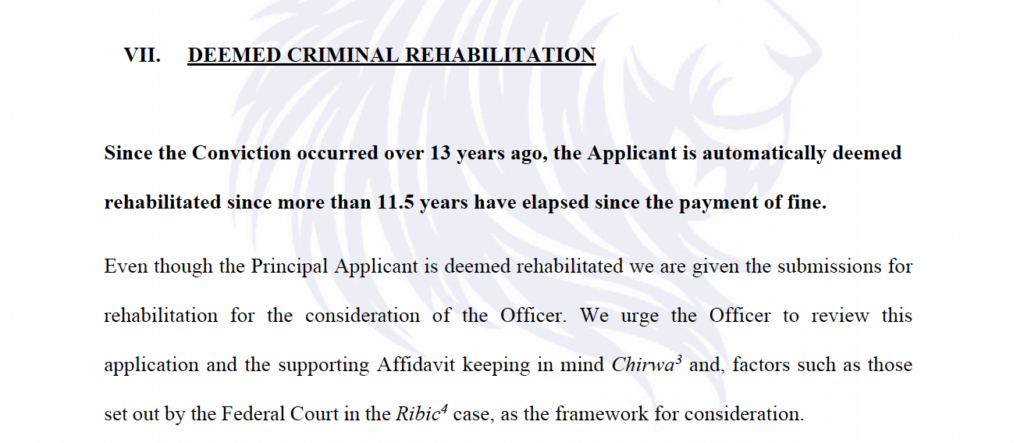
Deemed rehabilitation is a legal concept that allows individuals with old, minor criminal convictions to be considered rehabilitated by the passage of time alone, without needing a formal rehabilitation application.
In general terms, a person may be deemed rehabilitated if:
- At least 10 years have passed since the completion of all sentences
- The offence is considered non‑serious under Canadian law
- There are no subsequent offences
Deemed rehabilitation is not automatic in practice. While it exists in law, it must be clearly argued and properly supported, especially in spousal sponsorship and work permit applications.
In our client’s case:
- The offence occurred in 2012
- More than 13 years had elapsed
- There were zero repeat offences
- The offence was minor and non‑violent
Legally, the foundation for deemed rehabilitation was strong.
But strong facts alone are not enough.
Why Spousal Applications Are Still Refused Despite Deemed Rehabilitation
Many applicants assume immigration officers will automatically apply the law correctly. Unfortunately, that is not always the case.
Common reasons applications fail include:
- Failure to clearly connect the foreign offence to its Canadian legal equivalent
- Lack of properly drafted Canadian affidavits
- No legal analysis of rehabilitation factors
- Inadequate explanation of remorse and personal growth
- Treating criminal history defensively instead of candidly
In spousal cases, officers often default to refusal if criminal inadmissibility is not clearly neutralized with legal submissions.
Our approach at Fateh Law Corporation is different.
Our Legal Strategy Before IRCC
From the outset, we knew this case required more than generic submissions.
We built a comprehensive legal record that addressed every concern an immigration officer could raise.
1. Full and Honest Disclosure
The client did not minimize or hide his past. Instead, he:
- Candidly accepted responsibility
- Acknowledged the seriousness of the mistake
- Expressed genuine remorse
- Offered a sincere apology for his actions
Canadian immigration law values honesty. Attempts to downplay or conceal past conduct often lead to refusal.
2. Detailed Canadian Affidavits
We prepared professionally drafted Canadian affidavits explaining:
- The circumstances of the offence
- The client’s youth and immaturity at the time
- His clean record since 2012
- His personal, professional, and emotional growth
- His stable relationship and genuine marriage
Affidavits are not just narrative documents—they are sworn legal evidence.
3. Demonstrating Rehabilitation and Public Safety
We provided strong evidence that the client posed no risk to Canadian society, including:
- Absence of repeat offences
- Law‑abiding conduct for over a decade
- Responsible lifestyle and employment
- Emotional maturity and accountability
Rehabilitation is about who a person is today, not who they were years ago.
4. Strong Legal Submissions and Case Law
We grounded the application in established jurisprudence, including Chirwa and Ribic, emphasizing:
- Proportionality
- Compassion
- Humanitarian considerations
- The purpose of rehabilitation in immigration law
Officers must make reasonable decisions within the boundaries of the law. When guided properly, they do.
The Result: Justice and Reunification
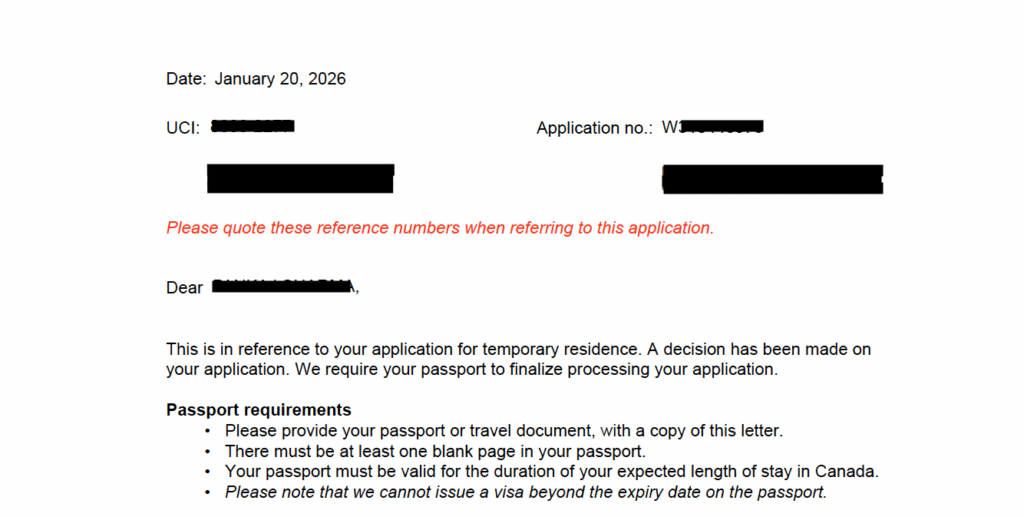
After years of separation and uncertainty, the law finally prevailed.
📅 January 20, 2026
- Passport Request issued
- Spousal open work permit approved
- Criminal inadmissibility resolved through deemed rehabilitation
Most importantly, our client could finally reunite with his wife in Canada and begin their life together—without the shadow of a youthful mistake.
Why This Case Matters Beyond One Client
This outcome is not just a success story—it is a message.
Canadian immigration law is designed to be fair, humane, and forward‑looking. When properly argued, it recognizes:
- Personal growth
- Accountability
- Rehabilitation
- The importance of family unity
No one should be permanently excluded from their spouse because of a minor mistake made over a decade ago.
Why You Need an Experienced Canadian Immigration Lawyer
Cases involving criminal inadmissibility are not DIY applications.
Small errors can result in:
- Years of refusal
- Prolonged family separation
- Missed opportunities
- Emotional and financial strain
At Fateh Law Corporation, we bring:
- Over a decade of litigation and immigration experience
- Deep knowledge of IRPA and Federal Court jurisprudence
- Strategic use of affidavits and evidence
- A client‑centered, human approach to advocacy
We do not simply file applications—we build legal cases.
Do Not Let Your Past Define Your Future
If you or your spouse:
- Have an old criminal record
- Were refused due to criminal inadmissibility
- Believe you may qualify for deemed rehabilitation
- Are you separated from your family because of a past mistake
There may be a lawful path forward.
Every case is different. The outcome depends on how the law is applied, how evidence is presented, and how rehabilitation is demonstrated.
Speak to Fateh Law Corporation
At Fateh Law Corporation, we understand that immigration law is about people—not just paperwork.
We fight for fairness, reunification, and second chances.
📞 Contact us today to discuss your case
📍 Serving clients across Canada and internationally
⚖️ Strategic. Compassionate. Results‑driven.
A youthful mistake should never become a lifetime sentence.
Let us help you move forward.