


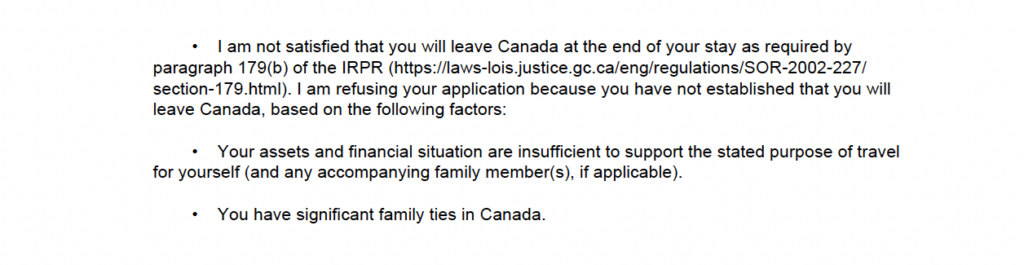
Every year, thousands of visitor visa applications to Canada are refused on two of the most commonly cited grounds:
- Family ties in Canada
- Financial situation and assets in the home country
These reasons appear simple on the surface—but in reality, they are often misapplied, poorly analyzed, or used as generic justifications without proper consideration of the evidence submitted by the applicant.
At Fateh Law Corporation, we regularly see refusals where immigration officers fail to conduct a genuine, balanced, and legally required analysis of the facts. In many of these cases, the refusal is not just unfair—it is legally unreasonable.
This is exactly what happened in one of our recent cases, where we successfully challenged a wrongful visitor visa refusal in the Federal Court of Canada and obtained a settlement from the Department of Justice dated December 23, 2025.
The Problem with “Family Ties in Canada” Refusals
One of the most misunderstood refusal grounds is “family ties in Canada.” Many applicants are told that because their spouse, child, or close relative lives in Canada, the officer is not satisfied that they will return to their home country.
But this is not how Canadian law works.
The presence of a family member in Canada does not automatically mean that a person intends to overstay or violate immigration rules. If that were the case, no spouse, parent, or sibling would ever receive a visitor visa.
What officers are legally required to do is a balanced assessment:
- Who is the applicant leaving behind?
- What obligations do they have in their home country?
- What social, emotional, and family responsibilities exist?
- What property, financial, or community ties anchor them?
In this case, our client was leaving behind:
- Elderly parents
- In-laws
- A brother
- Deep-rooted family obligations in India
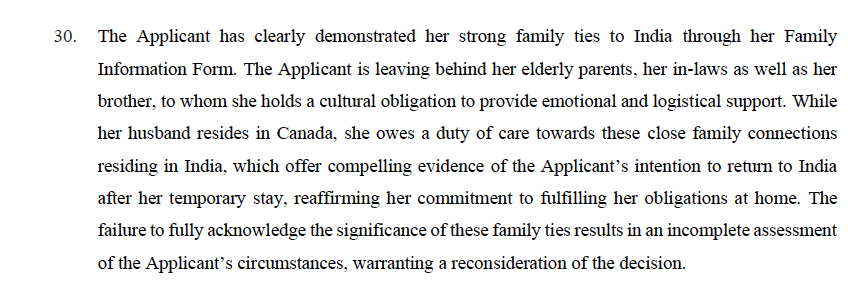
Yet none of these were meaningfully addressed in the refusal decision.
This kind of selective analysis—focusing only on a spouse in Canada while ignoring all other ties—is unreasonable and legally flawed.
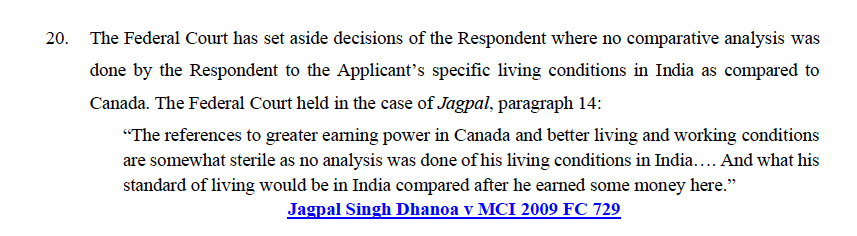
Financial Refusals Must Follow Federal Court Principles
Another common refusal ground is “insufficient financial resources.” But what many applicants don’t know is that the Federal Court has made it clear:
 👉 Officers must conduct a comparative financial analysis.
This means they must look at:
- The applicant’s finances in their home country
- The host’s finances in Canada
- The overall travel plan
- The duration and purpose of the visit
In our client’s case:
- She had ₹12 lakh in her savings account in India
- Her husband in Canada had approximately $34,000 CAD

This was clearly more than sufficient to support a short-term visit.
However, the officer failed to conduct any meaningful comparison or analysis. They simply dismissed the finances without engaging with the evidence. This is exactly the type of error the Federal Court repeatedly criticizes.
Why We Took This Case to Federal Court
At Fateh Law Corporation, we do not believe in accepting wrongful decisions quietly.
When an officer:
- Ignores evidence
- Applies the law incorrectly
- Uses generic language
- Fails to weigh competing factors
- Or gives boilerplate reasons
…that decision can and should be challenged.
In this case, we filed a Judicial Review application in the Federal Court of Canada. We prepared detailed legal submissions showing:
- Failure to assess all family ties
- Failure to conduct a comparative financial analysis
- Failure to engage with material evidence
- An unreasonable decision-making process
The Result: Settlement from the Department of Justice
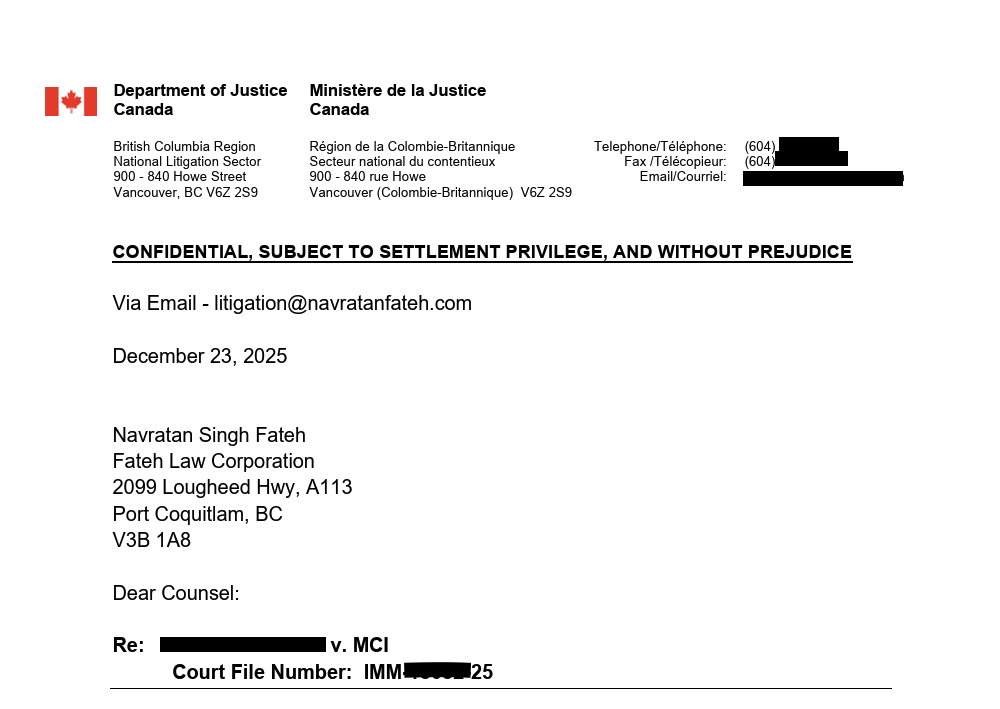
After reviewing our arguments, the Department of Justice of Canada agreed to settle.
On December 23, 2025, the refusal was officially set aside.
This means:
✔ The refusal is no longer valid
✔ The case will be reassessed
✔ A different immigration officer will make the new decision
✔ The file must be reviewed fairly and lawfully
We are now awaiting the redetermination and remain hopeful for a positive outcome.
Why This Matters for Other Applicants
If you received a refusal that says:
- “You have family in Canada”
- “Your financial situation is not sufficient”
- “You lack ties to your home country”
…that does not automatically mean the officer is correct.
Many refusals are:
- Legally flawed
- Procedurally unfair
- Based on incomplete analysis
- Issued without reviewing all documents
And most importantly—many of them can be challenged.
Why Choose Fateh Law Corporation?
Fateh Law Corporation is not just an immigration consultancy. We are a Canadian law firm led by a Barrister & Solicitor of Canada, with deep experience in:
- Federal Court litigation
- Judicial reviews
- Wrongful refusals
- Writs of mandamus
- Procedural fairness challenges
- Complex immigration disputes
We don’t just reapply—we fight back.
Our strategy is evidence-based, law-driven, and court-focused. Every application is prepared with potential Federal Court scrutiny in mind.
Don’t Accept an Unfair Refusal
If your visa was refused using generic language…
If your documents were ignored…
If your family ties were misinterpreted…
If your finances were not properly assessed…
You may have a strong legal case.
📞 Contact Fateh Law Corporation today to explore your legal options.
Because wrongful decisions should not define your future—and they don’t have to.