

A Spousal Open Work Permit (SOWP) is meant to support family unity in Canada by allowing spouses of eligible workers or students to work legally. Unfortunately, refusals based on misunderstandings of evidence and incorrect legal reasoning are becoming increasingly common. This case is a powerful example of how wrongful refusals can and should be challenged — and how experienced legal representation can make a decisive difference.
At Fateh Law Corporation, we regularly represent clients whose applications have been refused due to flawed assumptions by visa officers. In this matter, our firm successfully challenged a spousal open work permit refusal before the Federal Court of Canada, resulting in a settlement and re-determination by a different officer.
Why the Spousal Open Work Permit Was Refused
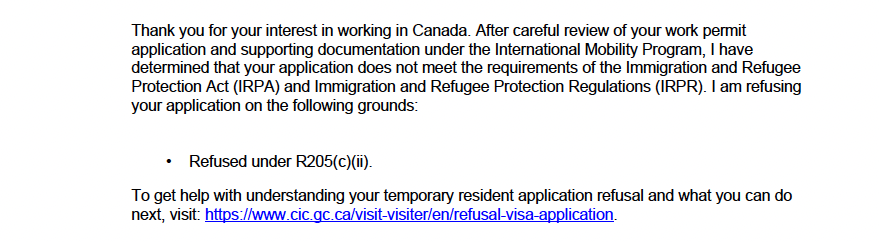
The visa officer refused the application on the ground that the pay stubs shown in the bank statements were allegedly not deposited by the employer. Based on this assumption, the officer concluded that the principal applicant did not meet the requirements of Immigration and Refugee Protection Regulations (IRPR) Regulation 205©(ii).
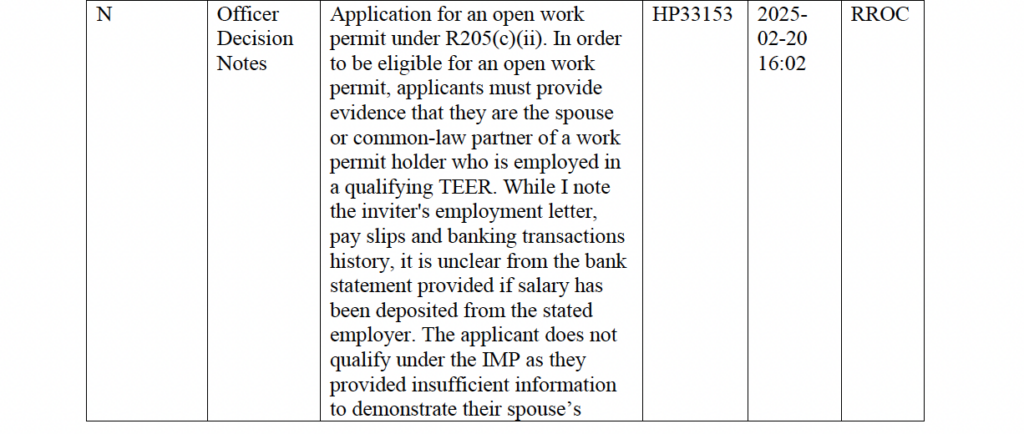 According to the refusal letter, the officer believed that because the deposits in the bank statement appeared under the name “CPT”, the salary was not being paid by the employer and therefore the employment could not be considered genuine.
This conclusion was legally and factually incorrect.
Payroll Deposits and Common Misunderstandings
In modern payroll systems, salary deposits often appear in bank statements under:
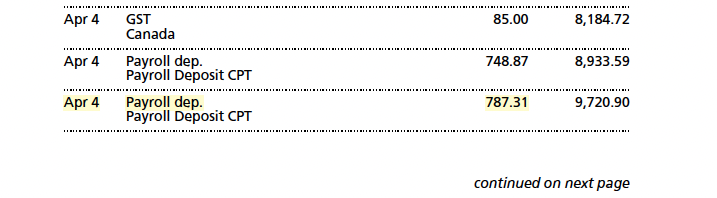
- The name of a payroll processing company
- An abbreviated corporate entity
- The name of the payroll software used by the employer
The presence of a name such as “CPT” does not imply that the employer is not paying the employee. It simply reflects how the employer processes payroll. This is a well-known and common practice in Canada.
A visa officer cannot reasonably conclude that employment is not genuine solely on the basis of how a payroll deposit appears in a bank statement.
Breach of Procedural Fairness
Even more importantly, this refusal violated the fundamental principle of procedural fairness.
Canadian immigration law is clear: if an officer has concerns about credibility or genuineness, they must provide the applicant with an opportunity to respond. This is typically done through:
- A Procedural Fairness Letter (PFL)
- An Additional Document Request (ADR)
- Follow-up questions seeking clarification
In this case, no such opportunity was provided.
Mere suspicion does not equal proof. An officer cannot refuse an application simply because they believe something might be wrong, without first allowing the applicant to address the concern. The failure to do so renders the decision unreasonable and procedurally unfair.
Federal Court Challenge by Fateh Law Corporation
Recognizing these serious legal errors, Fateh Law Corporation filed an Application for Leave and Judicial Review in the Federal Court of Canada.
Our legal arguments focused on:
- Misinterpretation of payroll and banking evidence
- Incorrect application of IRPR Regulation 205©(ii)
- Failure to follow procedural fairness requirements
- Unreasonableness of the refusal decision
After reviewing our submissions, the Department of Justice agreed that the refusal could not be defended.
Case Settled Outside Court
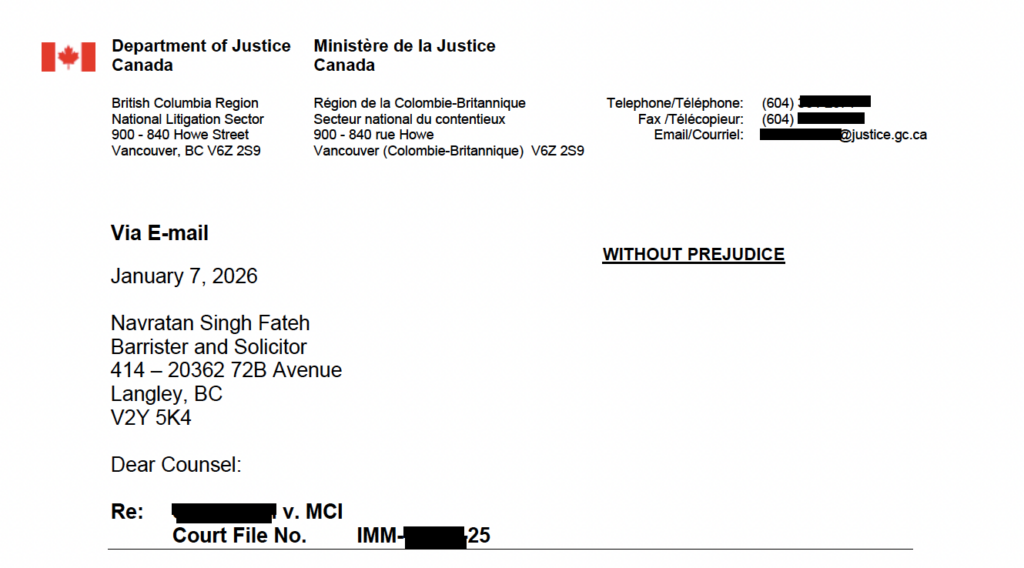
As a result of the strong legal arguments presented, the matter was settled outside of court.
The refusal decision was set aside, and the application will now be re-determined by a different visa officer. This ensures a fresh, fair, and unbiased assessment of the evidence.
We are confident that, upon proper review, the application will receive a positive decision.
Key Lessons for Applicants
This case highlights several important lessons:
- A visa refusal is not the end of the road
- Officers make mistakes — and those mistakes can be challenged
- Payroll and banking misunderstandings are common grounds for wrongful refusals
- Procedural fairness is a legal right, not a privilege
- Judicial Review is a powerful remedy when a decision is unreasonable
If your immigration application has been refused without giving you a fair chance to respond, you may have strong grounds to challenge the decision.
Why Choose Fateh Law Corporation
Fateh Law Corporation has over 12 years of experience representing clients in complex Canadian immigration matters, including:
- Spousal open work permit refusals
- Work permit and LMIA refusals
- Visitor visa and study permit refusals
- Permanent residence refusals
- Judicial Reviews before the Federal Court of Canada
Our firm is led by an experienced Barrister & Solicitor, with deep expertise in challenging wrongful IRCC decisions and holding decision-makers accountable under Canadian law.
Don’t Give Up Your Right to Justice
If your immigration decision is unreasonable, do not walk away. The law provides you with the right to Judicial Review in the Federal Court of Canada — but strict deadlines apply.
📞 Contact Fateh Law Corporation today to assess your refusal and determine whether a Federal Court challenge is the right strategy for you.
Fight for your future. Fight for your family. Fight for justice.
Fateh Law Corporation – Trusted Advocacy in Canadian Immigration Law.