


It is important to understand that the Parents and Grandparents Super Visa has become one of the most valuable immigration programs offered by Canada. For thousands of Canadian citizens and permanent residents, it provides an opportunity to have their parents and grandparents stay with them for extended periods without having to wait years for permanent residence through the Parents and Grandparents Sponsorship Program. As immigration policies continue to evolve, the Super Visa remains one of the most effective tools for family reunification.
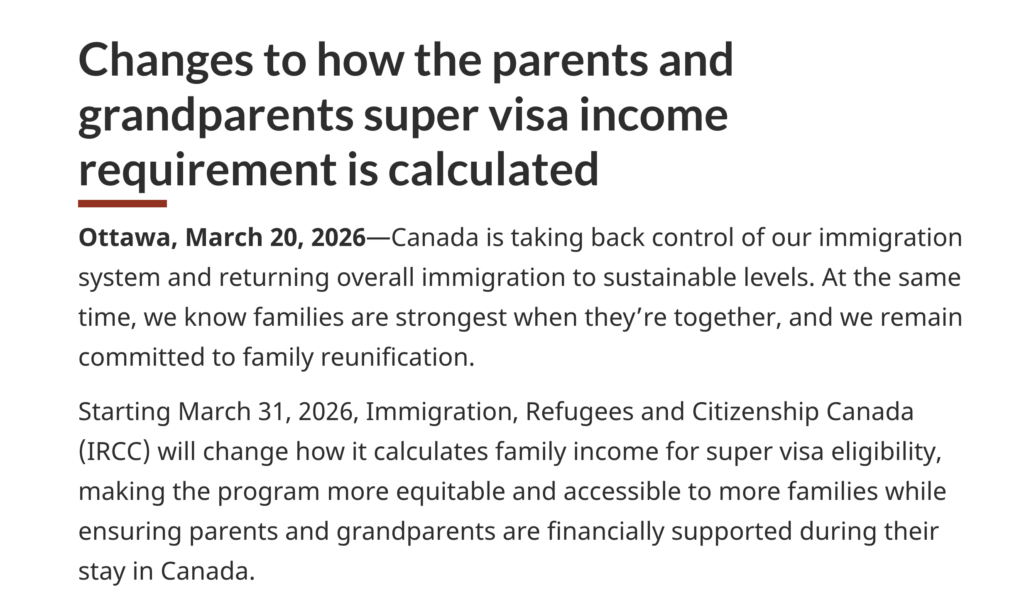
On March 20, 2026, Immigration, Refugees and Citizenship Canada (IRCC) announced one of the most significant changes to the Super Visa program since its introduction. Effective March 31, 2026, IRCC changed how it calculates the financial eligibility of Canadian hosts. The new policy introduces greater flexibility by allowing families to qualify through two alternative methods instead of relying solely on the previous year’s income. More importantly, for the first time, IRCC now permits eligible visiting parents and grandparents to contribute their own income toward meeting the financial requirement under certain circumstances.
 This change has been welcomed by many Canadian families. However, it has also created confusion because applicants often misunderstand what IRCC expects when relying on the income of the visiting parent or grandparent. One of the most common mistakes we have already observed is applicants submitting only an Income Tax Return from India or another foreign country and assuming that this document alone proves they satisfy the new rules. Unfortunately, this assumption can lead to unnecessary delays or even refusals.
The purpose of this article is to explain the new Super Visa income requirements in plain language, discuss the evidence IRCC expects, identify common mistakes, and provide practical guidance on preparing a strong application.
Understanding the Purpose of the Super Visa
The Canadian Super Visa was introduced to address a practical problem. The Parents and Grandparents Sponsorship Program has traditionally been subject to annual intake limits and significant processing times. Many Canadian families waited years before their parents or grandparents could immigrate permanently.
The Super Visa was designed to provide an alternative. Rather than granting permanent residence immediately, it allows parents and grandparents to visit Canada for extended periods while maintaining temporary resident status. The visa is generally issued as a multiple-entry visa, allowing repeated travel over several years, with each authorized stay significantly longer than that available under a standard visitor visa.
Because the Super Visa permits lengthy stays in Canada, IRCC has always required the Canadian host to demonstrate sufficient financial resources. The objective is straightforward: visitors should not become financially dependent on Canadian social assistance during their stay.
Why IRCC Changed the Income Rules
Canada has experienced considerable economic changes over the past several years. Inflation, employment fluctuations, temporary layoffs, career changes, and business cycles have affected many Canadian families.
Under the previous rules, IRCC examined only one taxation year immediately preceding the application. This sometimes produced unfair results.
Consider a Canadian permanent resident who earned an excellent income for several years but experienced a temporary reduction because of maternity leave, illness, or a brief period of unemployment. Although that individual remained financially capable of supporting visiting parents, they could fail the Super Visa income requirement simply because IRCC considered only one taxation year.
Similarly, many parents and grandparents continue to receive substantial pensions, rental income, investment income, or employment income in their home countries. Under the previous rules, these financial resources were largely irrelevant when calculating the Canadian host’s eligibility.
IRCC recognized these issues and introduced a more flexible approach beginning March 31, 2026.
The Two New Options
The revised policy creates two separate methods for satisfying the financial requirement.
Option One: Two-Year Income Flexibility

The first option benefits Canadian hosts whose income fluctuates.
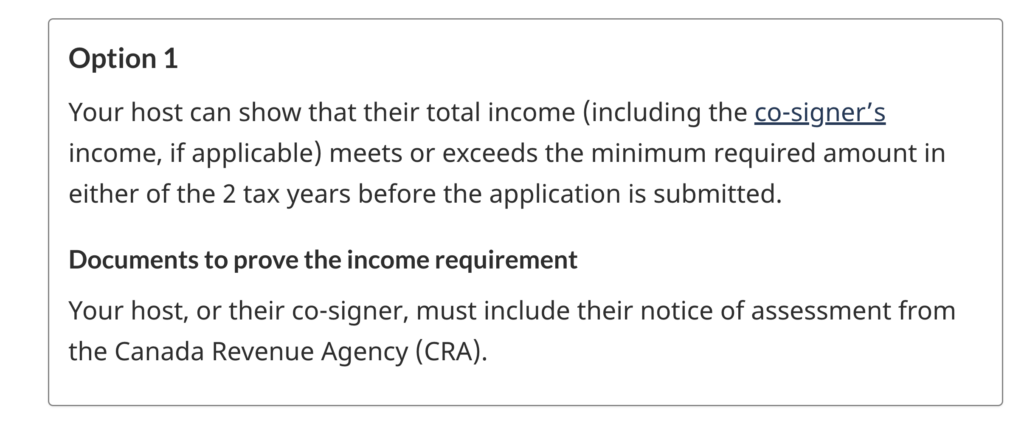
Instead of examining only one taxation year, IRCC now permits the host and any co-signer to satisfy the minimum necessary income using either of the two taxation years immediately preceding the application.
This provides important flexibility.
For example, suppose a Canadian citizen earned $98,000 in 2024 but only $71,000 in 2025 because they temporarily changed employment.
Under the previous rules, if the 2025 income fell below IRCC’s required threshold, the application could fail.
Under the new rules, IRCC may instead rely upon the stronger 2024 taxation year.
Many deserving families who previously would not have qualified can now satisfy the income requirement without delaying their application.
Option Two: Combining the Parent’s Income
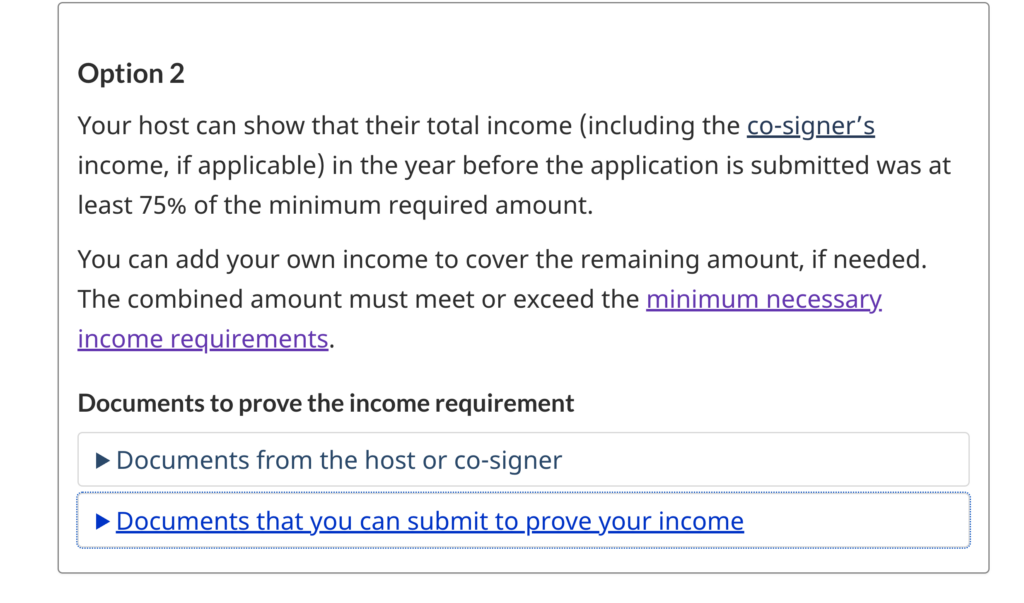
The second option represents the most significant change.
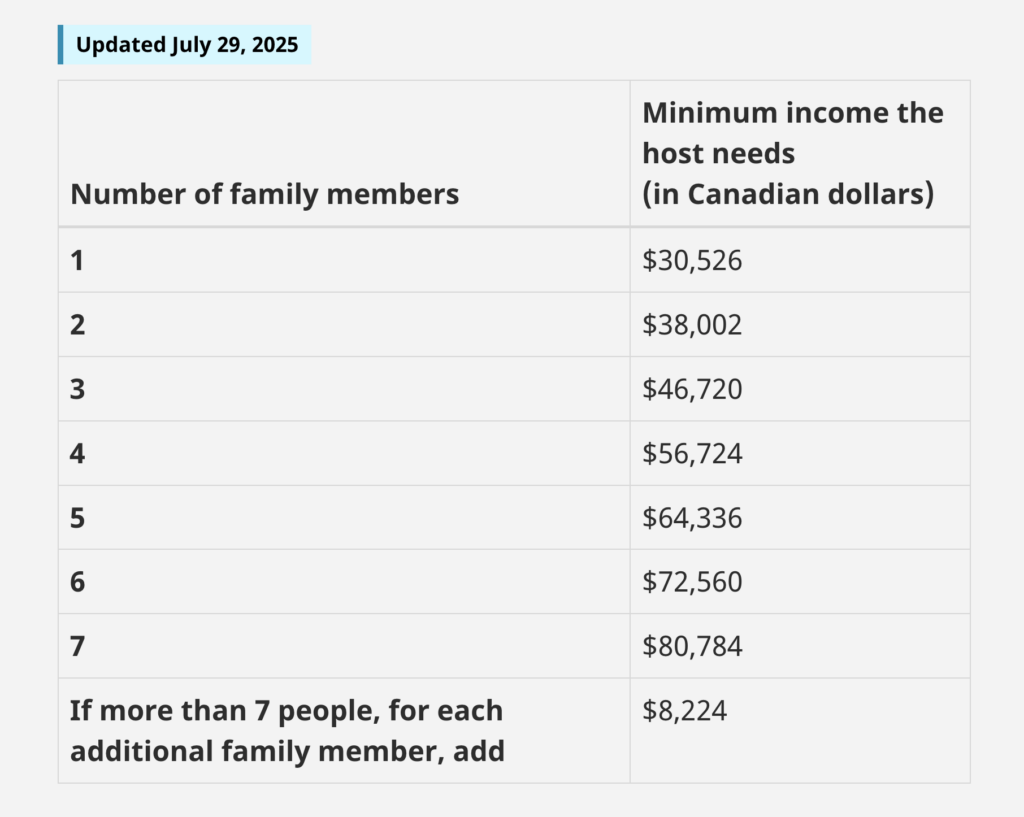
Under this approach, the Canadian host and any co-signer must first demonstrate income equal to at least seventy-five percent of the required minimum.
The remaining twenty-five percent may be satisfied using the income of the visiting parent or grandparent.
This is a remarkable policy development because it recognizes that many visiting parents remain financially independent.
For example, a retired government employee in India may receive a substantial monthly pension. Another parent may own several rental properties generating consistent rental income. Others continue operating successful businesses or receive regular investment income.
Previously, these financial resources provided little assistance.
Today, provided the Canadian host satisfies the seventy-five percent threshold, IRCC may consider the parent’s continuing income to bridge the remaining gap.
The Biggest Mistake Applicants Are Making
While the new rules are encouraging, they have also produced misunderstanding.
Many applicants believe that providing an Indian Income Tax Return automatically proves income.
That is not how IRCC assesses evidence.
A tax return demonstrates that income may have been reported during a previous taxation period.
However, IRCC’s concern extends beyond historical earnings.
Immigration officers also want evidence that the income is genuine, verifiable, ongoing, and likely to continue while the applicant is physically present in Canada.
This distinction is critical.
Suppose an applicant submits only an Income Tax Return showing employment income earned in India.
The immigration officer may reasonably ask several questions:
- Is the applicant still employed?
- Will salary continue while the applicant remains in Canada?
- Has employment already ended?
- Was the reported income earned from temporary work?
- Is there independent evidence supporting the tax return?
If these questions remain unanswered, concerns may arise regarding whether the financial requirement has truly been satisfied.
Why an Income Tax Return Alone May Be Insufficient
Tax returns summarize financial information.
They rarely establish that income continues today.
For that reason, IRCC specifically identifies additional supporting documentation.
Applicants should carefully review the nature of their income before deciding what evidence to submit.
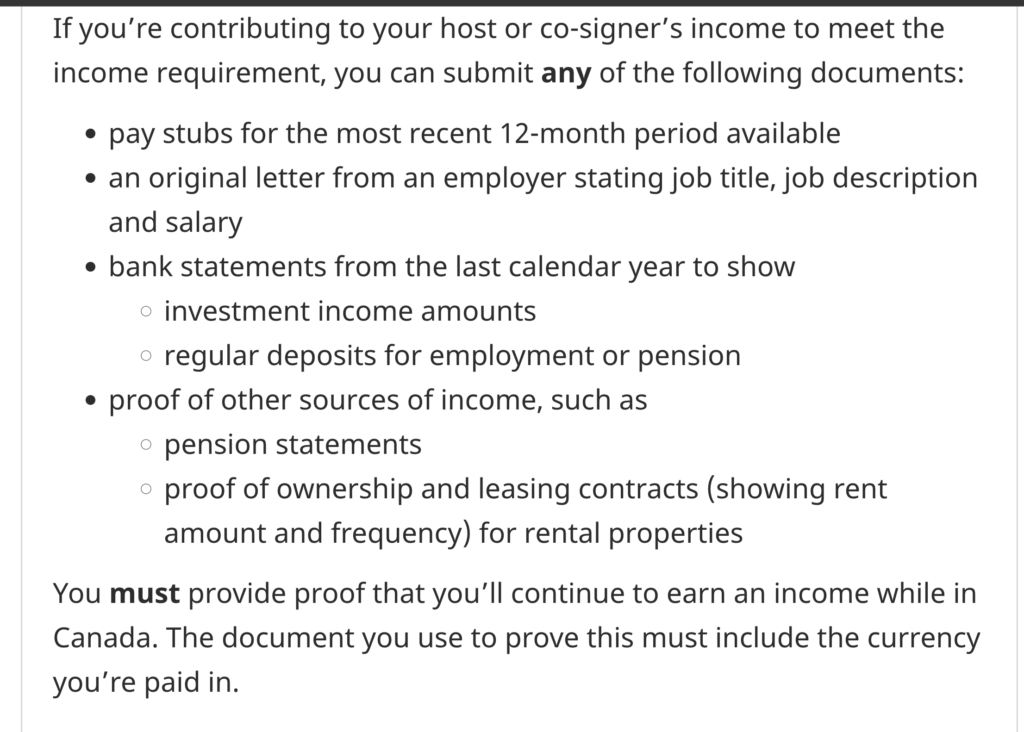
For employment income, recent pay stubs help establish that salary continues to be earned.
Employer letters confirm the applicant’s current position, job duties, salary, and employment relationship.
Bank statements demonstrate regular salary deposits.
Pension statements establish recurring retirement income.
Investment statements verify dividends or interest.
Rental agreements establish continuing rental revenue.
Ownership documents confirm the applicant actually owns the income-producing property.
Each document supports a different aspect of the financial picture.
Together, they provide immigration officers with confidence that the income genuinely exists and is likely to continue.
Continuing Income Is Essential
Perhaps the most overlooked requirement introduced under the new policy concerns future income.
IRCC specifically expects applicants relying upon their own income to demonstrate that they will continue earning that income while visiting Canada.
This makes perfect sense.
Suppose an applicant resigns from employment immediately before travelling to Canada.
Although they previously earned an excellent salary, that income no longer exists.
Similarly, if a business permanently closes before travel, historical income may no longer reflect the applicant’s present financial circumstances.
Conversely, pensions generally continue regardless of location.
Rental income frequently continues while the owner travels internationally.
Investment portfolios often continue producing dividends.
Remote employment may also continue if supported by appropriate documentation from the employer.
The focus therefore shifts from what the applicant earned last year to what income will realistically continue during the Canadian visit.
This distinction may significantly influence the outcome of a Super Visa application.
Frequently Asked Questions About the Canada Super Visa Rules (March 31, 2026)
1. What changed in the Canada Super Visa rules on March 31, 2026?
Effective March 31, 2026, IRCC introduced two new ways to meet the Super Visa income requirement. Canadian hosts can now use either of the two previous taxation years to qualify, or combine their income with an eligible parent’s or grandparent’s ongoing income if they first meet at least 75% of the required minimum.
2. Can parents use their own income for a Canada Super Visa?
Yes. Under the new rules, parents or grandparents can contribute their own ongoing income if the Canadian host (and any co-signer) already meets at least 75% of the required income threshold. The parent’s income must be genuine, verifiable, and expected to continue during their stay in Canada.
3. Is an Indian Income Tax Return enough for a Super Visa application?
No. An Income Tax Return alone generally shows past income, not whether it will continue. IRCC may also expect supporting documents such as pension statements, pay slips, employer letters, bank statements, or rental and investment records to verify ongoing income.
4. What documents help prove a parent’s income for a Super Visa?
The required documents depend on the income source. Common examples include recent pay slips, employer letters, pension statements, bank statements, rental agreements, property ownership documents, and investment statements. Together, these help demonstrate that the income is ongoing and verifiable.
5. Can I still qualify if my income dropped last year?
Possibly. Under the new Super Visa rules, eligible Canadian hosts can rely on either of the two taxation years immediately preceding the application. If an earlier tax year meets the required income threshold, you may still qualify.
6. What is the biggest mistake applicants make under the new Super Visa rules?
A common mistake is submitting only a foreign Income Tax Return to prove a parent’s income. IRCC also wants evidence that the income is genuine, ongoing, and likely to continue while the parent or grandparent is visiting Canada.