

How Strategic Judicial Review Led to a Successful Open Work Permit Amendment
Mistakes by Immigration, Refugees and Citizenship Canada (IRCC) are becoming increasingly common. What is even more concerning is that admitting a mistake does not always mean IRCC will correct it on its own.
This case handled by Fateh Law Corporation is a clear example of why legal strategy matters more than verbal assurances, and why pairing a reconsideration request with a Judicial Review in the Federal Court can dramatically change outcomes.
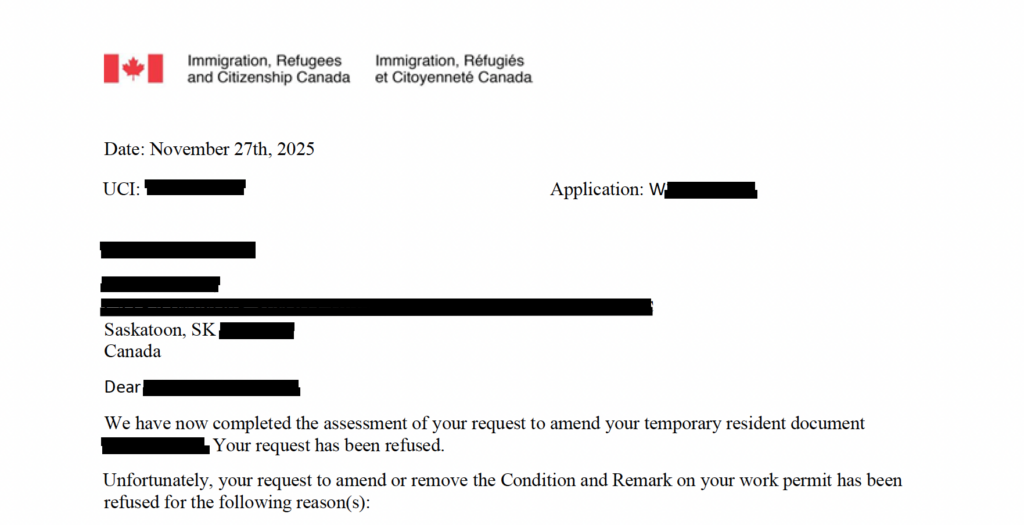
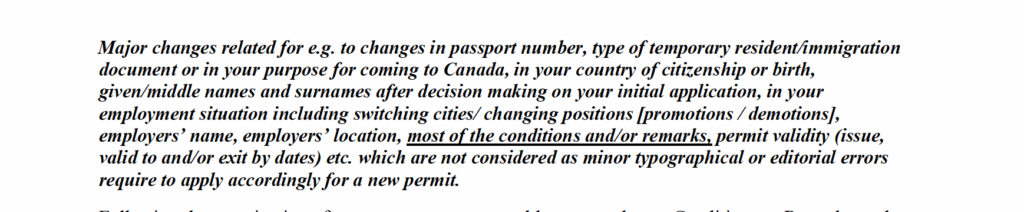
Background: Open Work Permit Amendment Refused Despite IRCC Admitting Error
Our client was inside Canada and applied for an amendment of conditions on their Open Work Permit, specifically requesting the removal of an agriculture-related work restriction.
After contacting IRCC through their official helpline, the client was explicitly informed that IRCC had made a mistake and that the restriction should not have been imposed. IRCC indicated over the phone that the issue would be corrected.
This situation highlights a critical reality in Canadian immigration law:
The Legal Options After an IRCC Refusal
Once the refusal was issued, there were two possible approaches:
A reconsideration request asks IRCC to re-examine its own decision.
Option 2: Reconsideration + Judicial Review (Strategic Approach)
- File a Judicial Review application in the Federal Court of Canada within the strict deadline, and
- Serve IRCC with a legal notice along with the reconsideration request, proving that litigation had already commenced.
Fateh Law Corporation advised pursuing Option 2.
Acting Within Critical Deadlines: Timing Was Everything
- 15 days to file Judicial Review if the refusal is made inside Canada
- 60 days if the refusal is made outside Canada
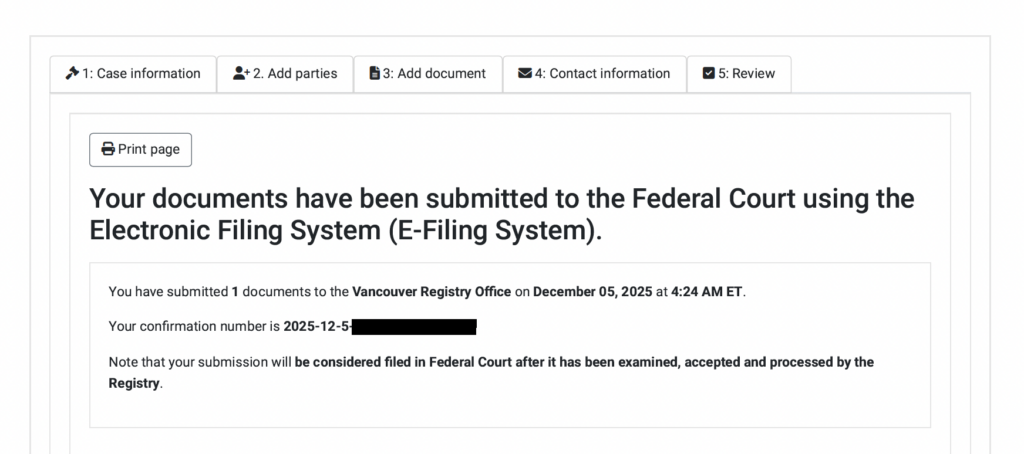
- December 5: Judicial Review was filed in the Federal Court within the 15-day deadline
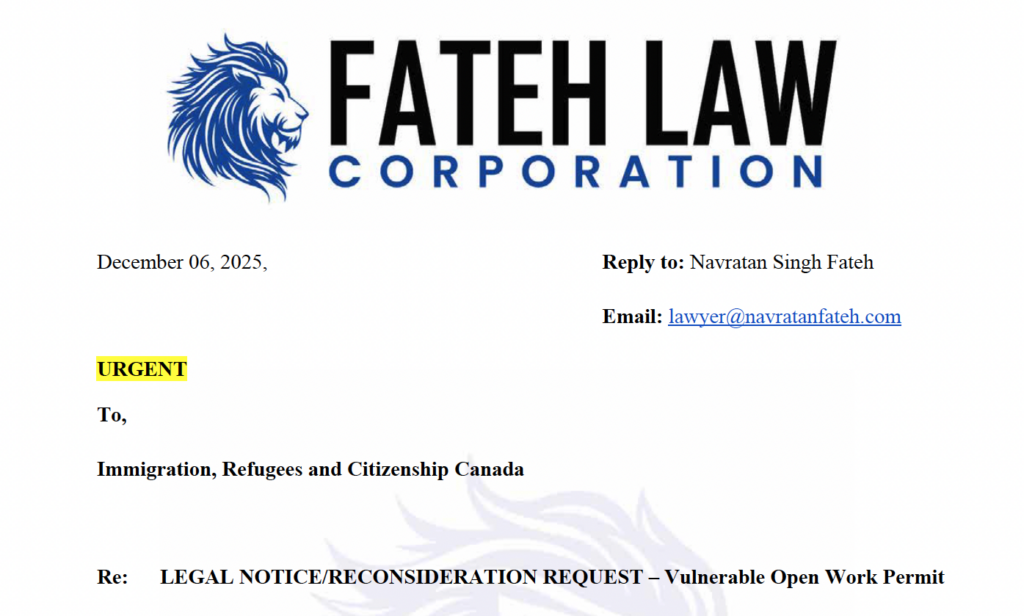
- December 6: A reconsideration request was submitted with a legal notice and proof of Federal Court filing

The Turning Point: Legal Notice Changed IRCC’s Response
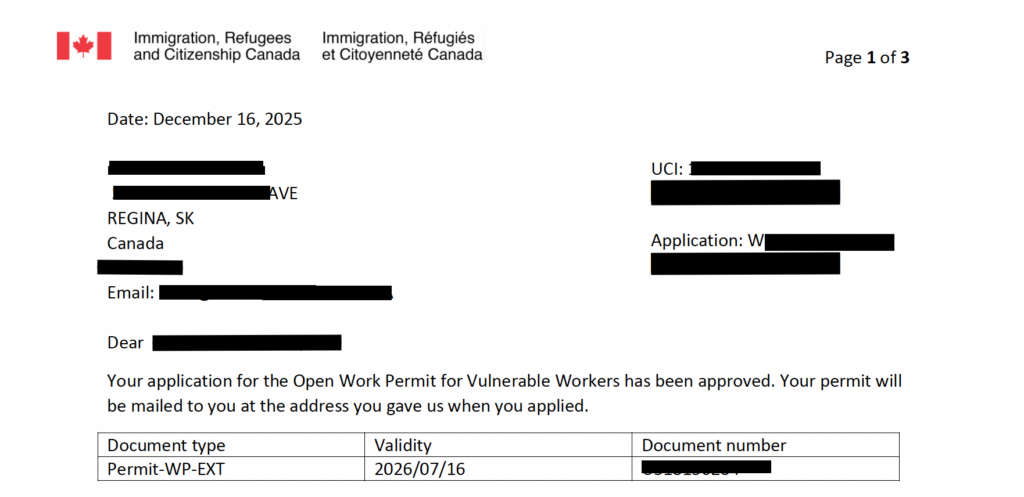
Within 10 days of receiving the legal notice and proof of Federal Court proceedings, IRCC’s approach changed completely.
- Took the reconsideration seriously
- Acknowledged the earlier mistake
- Approved the amendment request
- Removed the agriculture work restriction from the Open Work Permit
- Time
- Legal costs
- Stress for the client
- Court resources for both sides
Why This Strategy Works: The Legal Reality of Reconsiderations
This case reinforces an important legal truth:
- Respond to reconsiderations
- Provide reasons
- Act within any timeline
- Litigation risk
- Legal scrutiny
- Department of Justice involvement
Lessons for Applicants Facing Immigration Refusals
- Do not rely solely on verbal assurances from IRCC
- Do not assume a reconsideration will be reviewed
- Always protect your court deadline first
- A refusal can often be overturned without a full court hearing if challenged correctly
How Fateh Law Corporation Makes a Difference
- Immediate assessment of Judicial Review viability
- Parallel reconsideration strategies backed by legal notices
- Precise deadline management
- Strong litigation pressure without unnecessary court battles
Final Thoughts: Use Every Legal Tool Available
An immigration refusal does not mean the end of the road.
Handled correctly, it can become an opportunity for correction and justice.
- Within 15 days (inside Canada) or
- Within 60 days (outside Canada)
You may still have the right to challenge the decision.
Contact Fateh Law Corporation
- Judicial Review
- Reconsideration backed by legal action
- Federal Court litigation
Speak with Fateh Law Corporation to understand your rights and next steps.