

A Mother’s Dream Deferred
In 2023, a devoted mother applied for a Super Visa to visit her children in Canada — one a Canadian citizen and the other a permanent resident. She had travelled to Canada before and returned home every time without issue. Her travel history was clean, her intentions were genuine, and her family ties were strong.
Yet, despite all this, her application was refused by Immigration, Refugees and Citizenship Canada (IRCC).

The refusal letter cited the usual catch-all reasons — insufficient proof of ties, concerns about her intent to return, and doubts about her financial situation — even though every one of these concerns had already been addressed.
The decision broke her spirit. She had complied with every requirement and trusted the system. After this refusal, she gave up on ever applying again.
The Emotional Toll of a Visa Refusal
For many families, a visa refusal is not just a legal setback — it is an emotional wound.
Parents hoping to spend time with their children in Canada often face the burden of separation across continents, time zones, and years. The mother’s children — her daughter, now a Canadian citizen, and her son, a permanent resident — were heartbroken. They longed to have her close, to care for her in person, and to share milestones together.
But the system had shut the door on her once. Like many others, she believed that once refused, always refused.
This is where Fateh Law Corporation entered the story — to change the narrative.
When Hope Returned: A Second Chance in 2025
By 2025, the need for family reunification had become too strong to ignore. The mother’s health was becoming a concern, and her children wanted her to be part of their lives in Canada.
They reached out to Fateh Law Corporation, seeking not just a lawyer, but a strategy — a way to make the system listen.
From the very first consultation, we assured the family of one thing: a refusal is not the end. Every refusal can be challenged, every unfair decision can be reviewed, and every genuine case deserves a second look — especially when family unity is at stake.
Understanding the Super Visa
Before diving into what changed, it’s important to understand what the Super Visa is and why so many parents and grandparents face challenges getting approved.
The Super Visa is a special program that allows parents and grandparents of Canadian citizens and permanent residents to visit Canada for extended periods — up to five years per entry, with multiple entries allowed for ten years.
It’s designed to promote family reunification — one of the core objectives of Canada’s immigration system under the Immigration and Refugee Protection Act (IRPA).
Yet, in practice, many genuine applicants are refused because of overly rigid interpretations of their financial stability, travel history, or intent to return home. Officers often rely on boilerplate reasons without applying the principles of fairness, proportionality, and compassion that should guide every immigration decision.

The Legal Foundation: Rebuilding the Case
At Fateh Law Corporation, we began by dissecting the refusal decision from 2023. We identified several inconsistencies and weaknesses in the officer’s reasoning. The client had a proven history of returning home, strong family and financial ties, and previously approved Canadian visits — yet none of this was meaningfully addressed in the decision.
We knew this case required a structured, evidence-based, and legally fortified approach.
Our team built the application around three key pillars:
- A Detailed Canadian Affidavit — The affidavit explained the genuine purpose of the visit, her ties to her home country, her previous compliance with Canadian laws, and the humanitarian importance of reuniting with her family.
- Comprehensive Legal Submissions — We prepared written legal arguments referencing relevant case law, policy manuals, and the Federal Court’s past judgments on visa refusals. We emphasized that under section 22(2) of IRPA, having family in Canada does not automatically mean an applicant lacks the intent to return — the concept of dual intent allows applicants to have both temporary and permanent intentions simultaneously.
- Commitment to Federal Court Review — We explicitly informed IRCC that any unreasonable refusal would be challenged before the Federal Court of Canada. This demonstrated both our preparedness and the legal seriousness of our case.
The Role of Dual Intent: A Misunderstood Principle
One of the most common reasons for visa refusals is the officer’s failure to apply dual intent correctly.
Under section 22(2) of the Immigration and Refugee Protection Act, an applicant can simultaneously have:
- The intention to visit temporarily, and
- The hope or plan to immigrate permanently in the future.
These two intentions are not mutually exclusive. Yet, many refusals are based on the mistaken assumption that a parent visiting their Canadian children must intend to overstay.
In our legal submissions, we addressed this misinterpretation head-on, citing Federal Court cases where judges have repeatedly held that dual intent is a legitimate and lawful concept. A well-drafted submission ensures that the officer cannot disregard this without risking a judicial review challenge.
A Human Story Told Through Law
At the heart of every immigration file is a human story. In this case, we didn’t just submit documents — we told a story.
We presented her not as an applicant on paper, but as a mother who raised two successful children who now contribute to Canadian society. We showed that allowing her to visit under a Super Visa was not just about convenience — it was about honouring Canada’s values of family unity, compassion, and justice.
We backed that story with strong legal authority and credible documentation.
IRCC’s Decision: Approval Granted
After weeks of careful review, IRCC issued the decision — the Super Visa was approved.
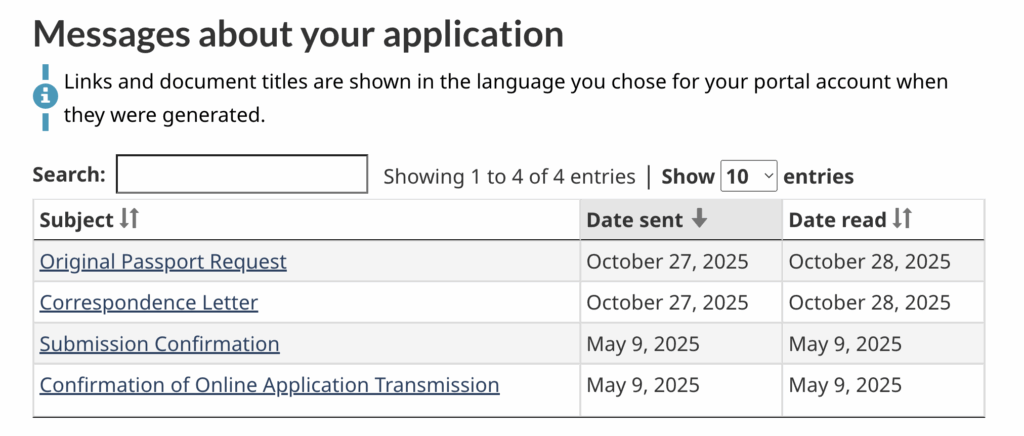

The joy that followed was indescribable. A mother who had once been refused now held a visa allowing her to visit her family for up to five years at a time.
Her children, both established in Canada, could finally welcome their mother into their homes. There were tears, gratitude, and relief — and a deep sense of justice being restored.
Why Legal Representation Matters
This success story highlights a powerful truth:
Strong legal representation can turn a refusal into an approval.
Many applicants assume that visa decisions are final and that reapplying is futile. But in reality, the quality of representation and documentation can change everything.
A lawyer’s role goes beyond filling out forms — it involves:
- Interpreting immigration law and policy;
- Anticipating grounds of refusal;
- Addressing them preemptively through legal submissions; and
- Ensuring every decision-maker understands the human stakes involved.
At Fateh Law Corporation, we don’t just prepare applications; we build legal cases — ready to defend in the Federal Court of Canada if needed.
When to Challenge a Refusal in Federal Court
If an application is refused despite being complete and well-supported, the next step is often a judicial review in the Federal Court of Canada.
A judicial review is not a re-application; it is a legal challenge that examines whether the officer’s decision was reasonable and procedurally fair.
We advised our client from the beginning that if her second application were to be refused again, we would not hesitate to challenge it in court. This approach signaled seriousness and commitment to due process — and likely influenced how the case was reviewed.
The Larger Message: Don’t Give Up
Immigration refusals can feel final, but they rarely are. Every decision can be re-evaluated, clarified, or corrected through strategic reapplication or judicial review.
The mother in this story gave up once — but when she chose to try again with legal guidance, her outcome changed dramatically.
Her story sends a message to thousands of families facing similar struggles:
Never give up after a refusal. Seek help, rebuild your case, and fight for your right to family reunification.
Why Family Reunification Matters
The principle of family reunification is not just a moral value — it is embedded in the Immigration and Refugee Protection Act itself. Section 3(1)(d) of IRPA explicitly lists “the goal of seeing that families are reunited in Canada” as one of the core objectives of Canadian immigration policy.
Unfortunately, this principle is often overshadowed by bureaucratic caution. Officers may focus excessively on speculative concerns rather than the human realities behind the application. That is why legal advocacy plays such a vital role in restoring balance and fairness to the process.
Conclusion: A Story of Faith, Law, and Perseverance
This case stands as a testament to what can be achieved when faith meets strategy.
- A mother who once gave up now holds a Super Visa to Canada.
- A family once separated is now reunited.
- A system that once seemed indifferent now reflects justice and compassion.
At Fateh Law Corporation, we are proud to have played a part in this journey. But more importantly, we are reminded that every refusal holds within it the potential for redemption — when met with perseverance, preparation, and legal strength.
If your family has faced refusals — whether for a visitor visa, Super Visa, or permanent residency — know that there is a path forward.
💡 Apply through a Canadian lawyer.
⚖️ If refused, fight your case in the Federal Court of Canada.
❤️ Because family reunification is worth fighting for.
Fateh Law Corporation
Reuniting Families. Restoring Hope. 🇨🇦
📞 Contact us if you or your loved ones have faced multiple refusals. Let us help you turn your setback into a success story.