


Introduction: A Case That Tested the Limits of Fairness
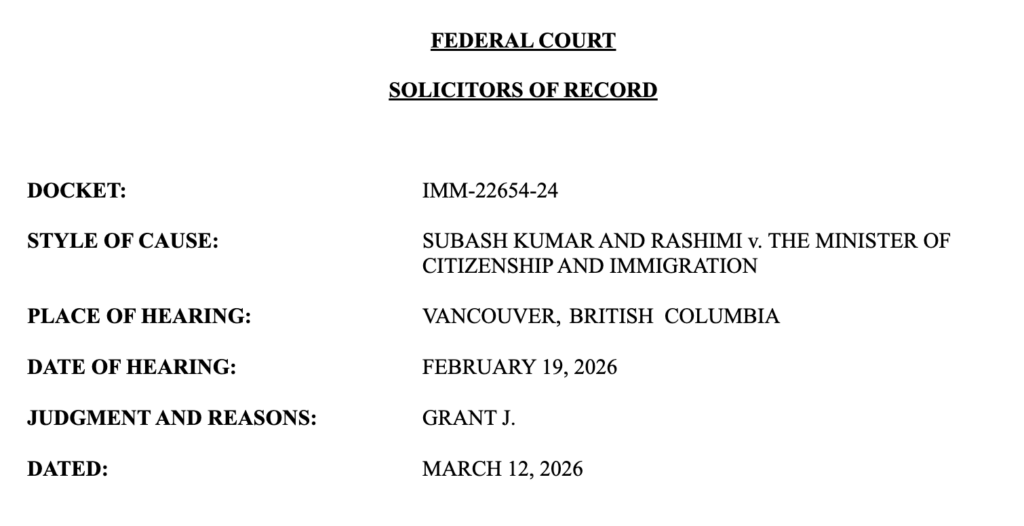
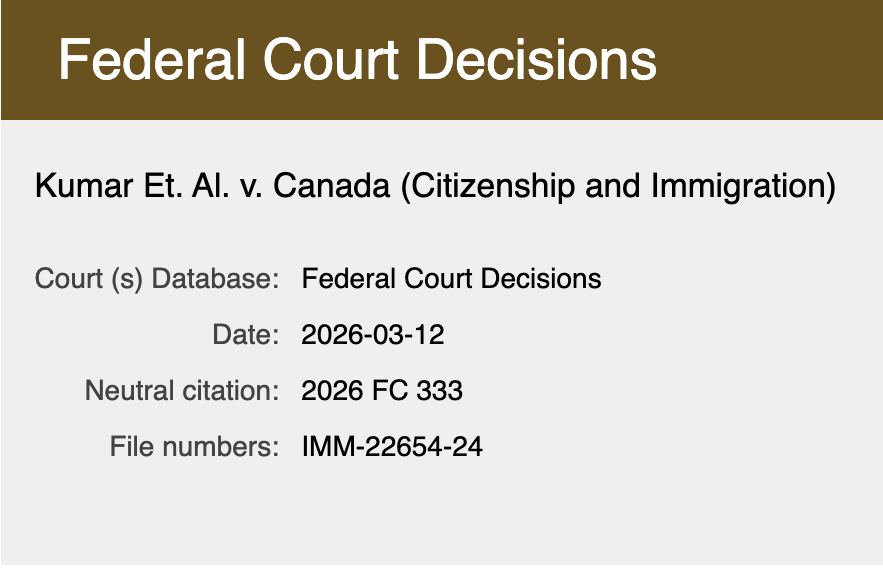
On March 12, 2026, the Federal Court of Canada released its decision in Kumar v Canada (Citizenship and Immigration), 2026 FC 333, a case that highlights a growing concern in immigration law—repeated refusals despite successful court challenges.
For my clients, this was not just a legal battle. It was a deeply personal struggle to reunite with their children in Canada. For me, as counsel, it became a test of persistence, strategy, and commitment to justice.
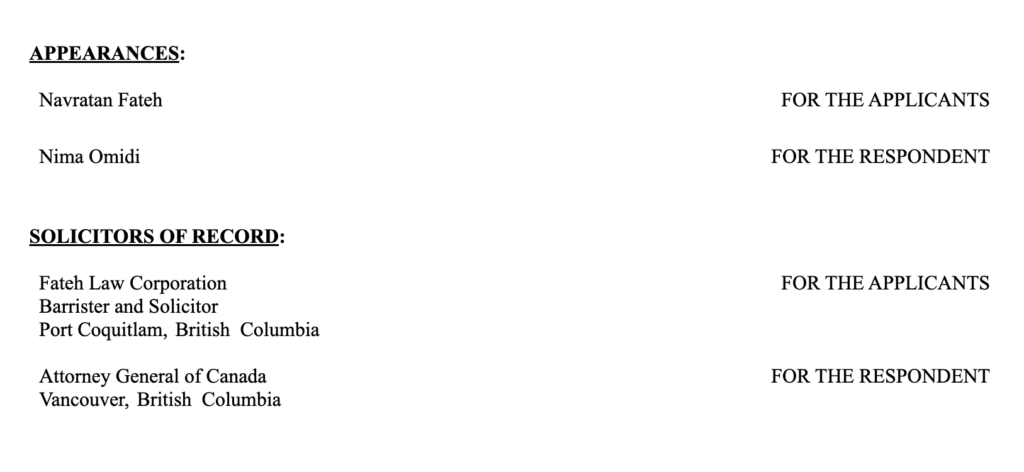
After multiple refusals, two settlements, a mandamus application, and four court interventions, the Federal Court finally granted judicial review, ordered expedited reconsideration, and awarded $1,000 in costs against the Minister—a rare and meaningful outcome.
The Background: A Simple Goal, A Complex Journey
The applicants, Subash Kumar and Rashmi Kumar, are Indian citizens whose two children were studying in Canada. Their intention was straightforward: to visit their children temporarily and return to India.
They first applied for a Temporary Resident Visa (TRV) on February 14, 2024. The application was refused within days.
The refusal cited:
- Family ties in Canada
- Concerns about temporary intent
- A conclusion that their incentives to remain in Canada outweighed their ties to India
However, this reasoning failed to meaningfully engage with the substantial evidence submitted by the applicants.
Strong Evidence Ignored
From the outset, the applicants presented a compelling case:
- Established financial resources
- Stable employment and business interests
- Elderly parents in India requiring care
- Extensive travel history with compliance
- Clear intent to return after visiting their children
Despite this, the visa officer relied on generalized reasoning and provided minimal justification, largely focusing on the fact that both children resided in Canada.
First Judicial Review: A Strategic Settlement
Recognizing the legal deficiencies, we filed an application for judicial review before the Federal Court of Canada.
The Department of Justice chose not to defend the refusal and instead offered a settlement. The matter was sent back for reconsideration.
From a litigation standpoint, settlement is often the most practical outcome. It avoids delay and provides the applicant another opportunity with a different officer.
We accepted.
Second Refusal: A Repeated Pattern
Despite the settlement, the application was refused again.
The reasoning remained substantially similar.
This raised a critical concern: was the reconsideration process meaningful, or merely procedural?
Second Judicial Review: Supporting the Client
At this stage, my clients had already incurred significant legal costs.
As counsel, I made a decision to reduce my legal fees and continue advocating for them. We returned to the Federal Court for a second judicial review.
Once again, the Department of Justice offered a settlement.
Once again, we accepted in good faith.
Delays and Mandamus: Forcing a Decision
Following the second settlement, immigration authorities delayed reopening the file.
This delay had real consequences:
- The applicants missed their children’s convocation
- They were unable to provide emotional support during critical times
- The prolonged separation caused significant distress
To address this, we filed a mandamus application—compelling immigration authorities to act.
Shortly thereafter, the file was reopened.
Third Refusal: Breaking Trust in the System
The result?
Another refusal.
For the third time.
The reasoning remained largely unchanged, again focusing on family ties in Canada and failing to properly weigh the applicants’ ties to India.
At this stage, the applicants had lost confidence in the system.
The Third Judicial Review: A Shift in Strategy
Despite the frustration, I advised pursuing one final judicial review.
This time, our approach was different.
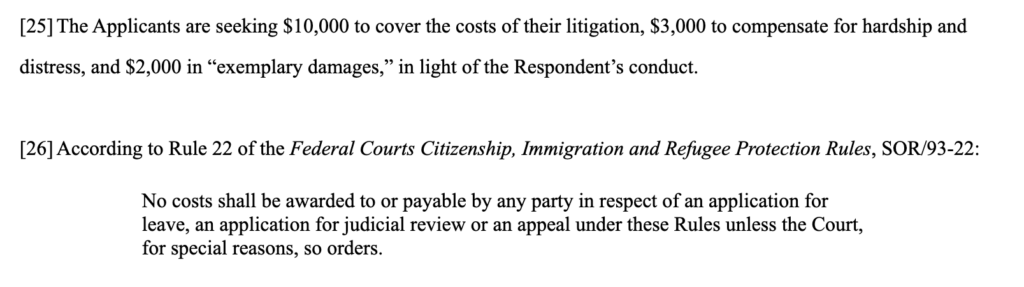
We sought:
- Judicial review of the refusal
- A directed verdict (approval of the visa)
- Costs against the Minister
This was no longer just about correcting an error—it was about addressing a pattern of unreasonable decision-making.
The Federal Court’s Analysis: A Clear Finding of Unreasonableness
The Court found that the visa officer’s decision was unreasonable.
Failure to Consider “Pull Factors”
The Court emphasized that officers must assess both:
- Push factors (reasons to stay in Canada)
- Pull factors (reasons to return home)
In this case, the officer failed to consider significant pull factors, including:
- Economic ties
- Family obligations in India
- Travel history demonstrating compliance
This omission was critical and rendered the decision unreasonable.
The Problem with Family Ties Reasoning
The Court also highlighted a fundamental flaw in the officer’s reasoning.
By relying heavily on the applicants’ desire to visit their children, the officer effectively turned the purpose of the visit into a ground for refusal.
As the Court noted, this creates an absurd result—family reunification, a recognized objective under immigration law, becomes the reason for denial.
Procedural Fairness Concerns
The applicants also raised concerns about bias, particularly due to repeated refusals and references to prior applications.
While the Court did not make a definitive finding of bias, it acknowledged that the circumstances could reasonably lead applicants to believe the process was unfair.
The Court even warned that similar future conduct could result in a different conclusion.
Costs Awarded: A Significant Outcome
One of the most important aspects of the decision was the award of costs.
Under Federal Court rules, costs are rarely granted in immigration matters unless “special reasons” exist.
In this case, the Court found such reasons, including:
- Three successful challenges to similar refusals
- Repeated unreasonable decisions
- Unnecessary litigation
The Court awarded $1,000 in costs payable forthwith.
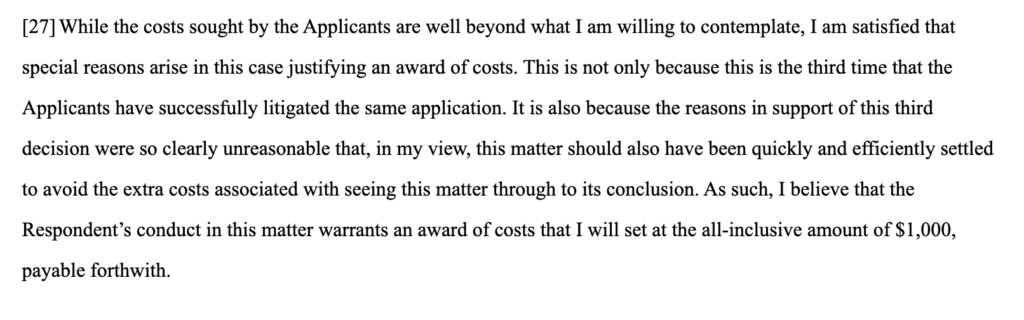
While modest, this award sends a strong message:
There are consequences for repeated unreasonable decision-making.
No Directed Verdict, But Expedited Reconsideration
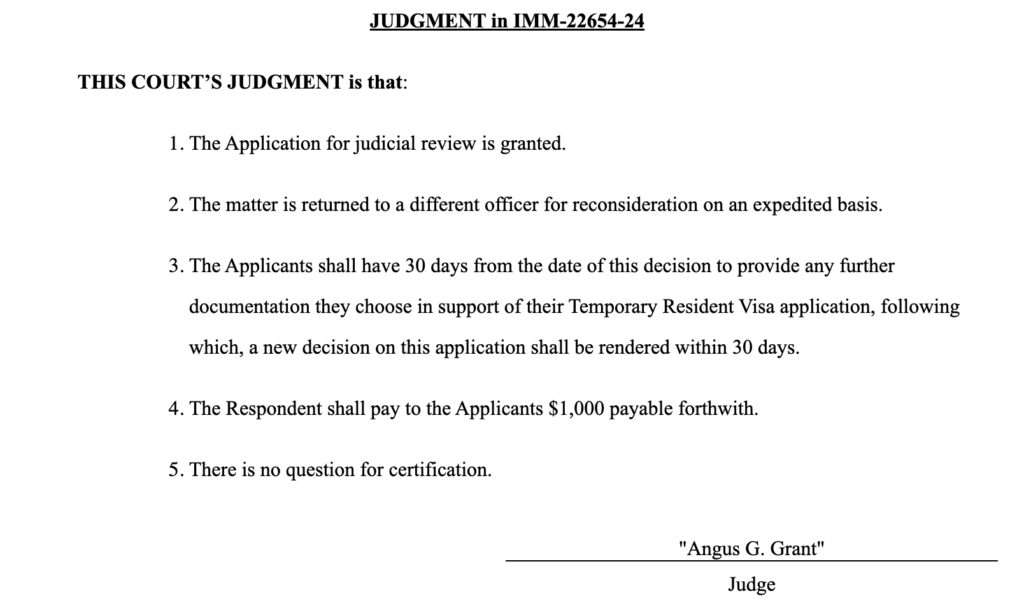
Although the Court declined to grant a directed verdict, it ordered:
- Reconsideration by a different officer
- An expedited timeline
- Opportunity for additional submissions
This ensures a fairer process moving forward.
A Broader Systemic Issue
The Court referenced concerns raised by the immigration bar regarding a troubling trend:
Applications that are set aside by the Court are often refused again on identical grounds.
This practice risks:
- Undermining judicial authority
- Wasting resources
- Eroding trust in the system
This case stands as a clear example of that concern.
Lessons for Applicants
If you have been refused a visitor visa, this case offers important insights:
1. Refusals Are Not Final
You may have strong grounds for judicial review.
2. Evidence Must Be Properly Assessed
Officers cannot ignore key documentation.
3. Family Ties in Canada Are Not a Negative Factor Alone
They must be balanced against ties to your home country.
4. Persistence Can Lead to Success
Even multiple refusals can be overcome.
Lessons for Practitioners
For legal professionals, this case reinforces:
- The importance of challenging unreasonable decisions
- The limits of settlement when reconsideration is not meaningful
- The strategic use of mandamus
- The value of client-focused advocacy
The Human Impact
Behind every immigration case is a human story.
In this case:
- Parents were separated from their children
- Milestones were missed
- Emotional distress accumulated over time
These realities underscore why fair and reasonable decision-making is essential.
Why Choose Fateh Law Corporation
At Fateh Law Corporation, we bring:
- Over a decade of Federal Court litigation experience
- Deep understanding of TRV refusals
- Proven success in complex cases
- Commitment to client-centered advocacy
We do not give up when cases become difficult.
Conclusion: A Message from the Federal Court
The decision in Kumar v Canada (Citizenship and Immigration), 2026 FC 333 sends a powerful message:
- Visa officers must provide reasonable decisions
- Evidence must be meaningfully considered
- Repeated refusals without proper justification will not stand
Most importantly, it reaffirms that the Federal Court of Canada remains a critical safeguard in ensuring fairness in immigration law.
Contact Us
If your visa has been refused, you may have legal options.
Contact Fateh Law Corporation today to discuss your case and take the next step toward justice.