

Canadian immigration refusals often rely on misinterpretation of the law, and one of the most common errors we see involves the Low Income Cut-Off (LICO) requirement. A recent Federal Court case handled by Fateh Law Corporation is a clear example of how unpublished and unlawful criteria can lead to wrongful refusals — and how such decisions can be overturned through strategic litigation.
What Is LICO — and When Does It Actually Apply?
The Low Income Cut-Off (LICO) is a financial threshold used by Immigration, Refugees and Citizenship Canada (IRCC) in very specific circumstances.
LICO applies only where the applicant will be financially dependent on the sponsor, such as:
- Parent and Grandparent sponsorship applications
- Cases where age, medical condition, or other factors create long-term dependency
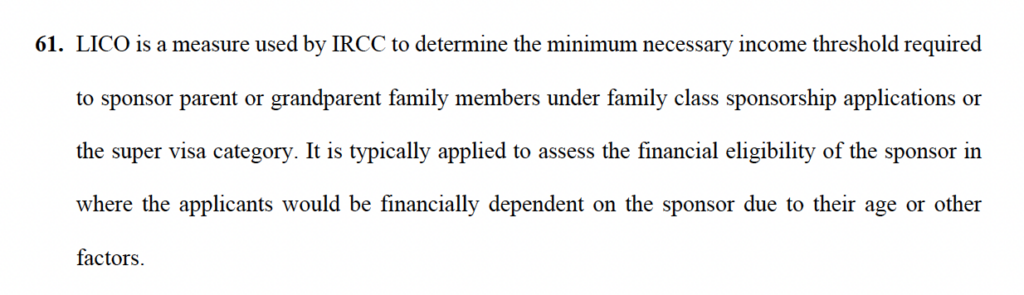
In these situations, the sponsor must demonstrate sufficient income to support the applicant in Canada.
LICO Does NOT Apply to Spouses of International Students
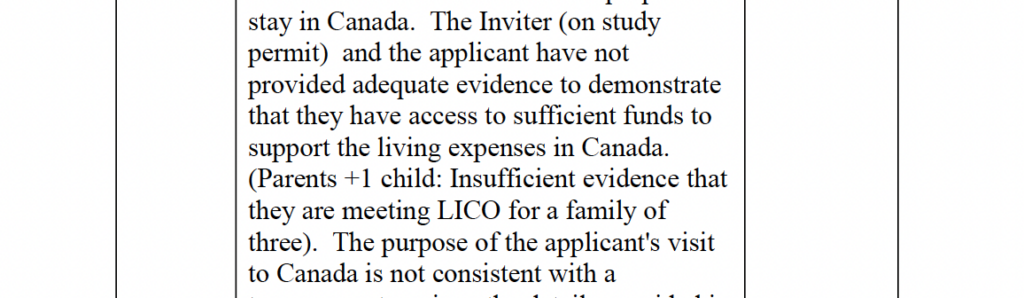
In this case, the applicant was the spouse of an international student, applying under the LMIA-exempt category C42.
Importantly:
- There is no requirement in the Immigration and Refugee Protection Act (IRPA)
- No requirement in the Regulations
- No published IRCC guideline

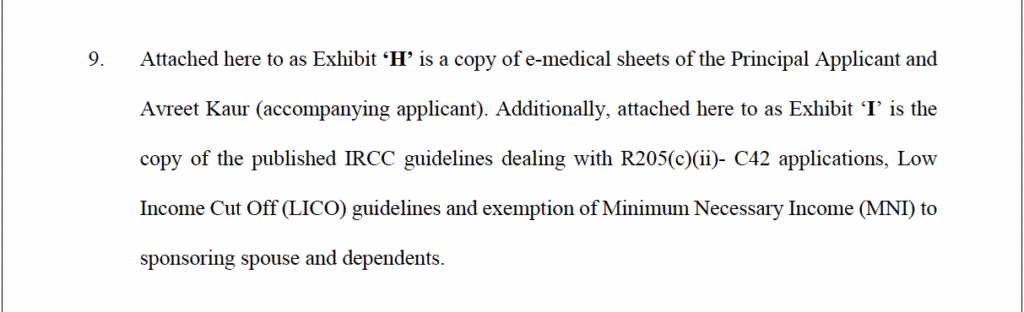
that mandates meeting the Low Income Cut-Off for this category.
Despite this, the immigration officer refused the application solely on the basis that the sponsor did not meet LICO.
Immigration Officers Cannot Create Their Own Rules
Canadian administrative law is clear:
Decision-makers must act within the authority granted to them by law.
When an officer applies a requirement that:
- Is not found in legislation
- Is not found in regulations
- Is not published in official guidelines
The decision becomes ultra vires — meaning outside the scope of legal authority — and therefore unreasonable.
This was precisely the issue in our client’s case.
Taking the Matter to Federal Court
Fateh Law Corporation filed an Application for Leave and Judicial Review before the Federal Court of Canada, challenging the refusal on the grounds that:
- LICO was incorrectly applied
- The decision lacked legal justification
- The officer relied on criteria that do not exist in law
Initially, the Department of Justice refused to settle.
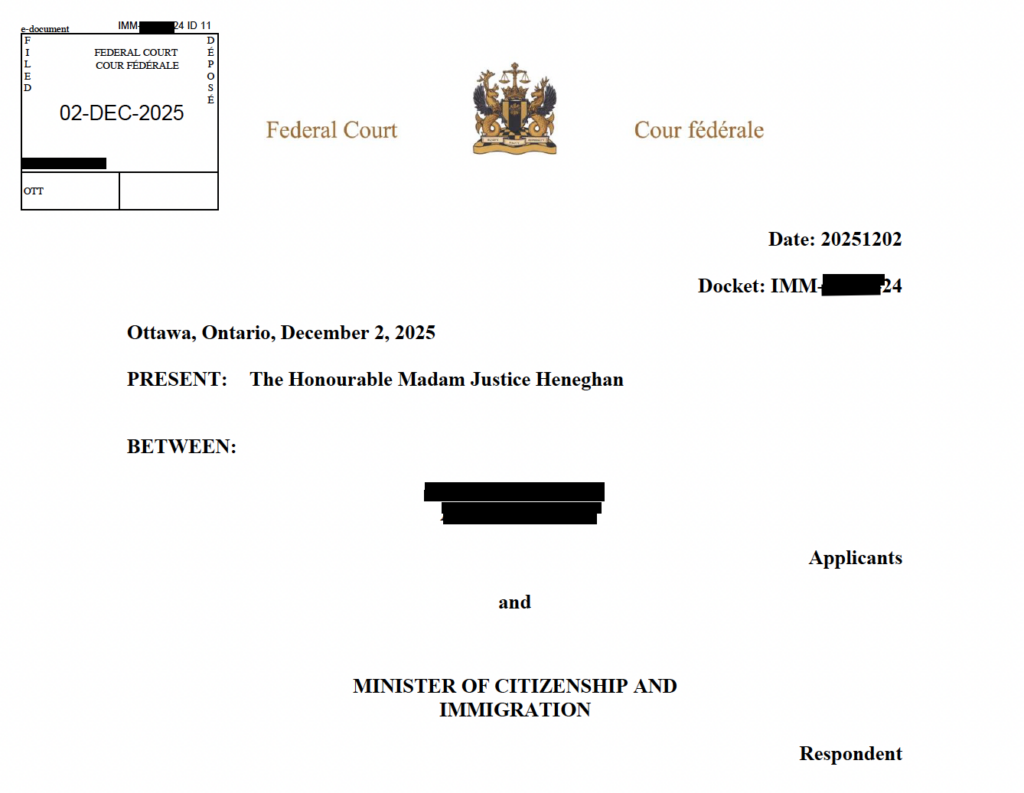
On December 2, Madam Justice Heneghan issued a production order, directing IRCC to produce the Certified Tribunal Record within 21 days — a strong procedural step indicating serious judicial scrutiny.
Justice Delivered Through Settlement
Following the Court’s intervention, the Department of Justice reconsidered its position.
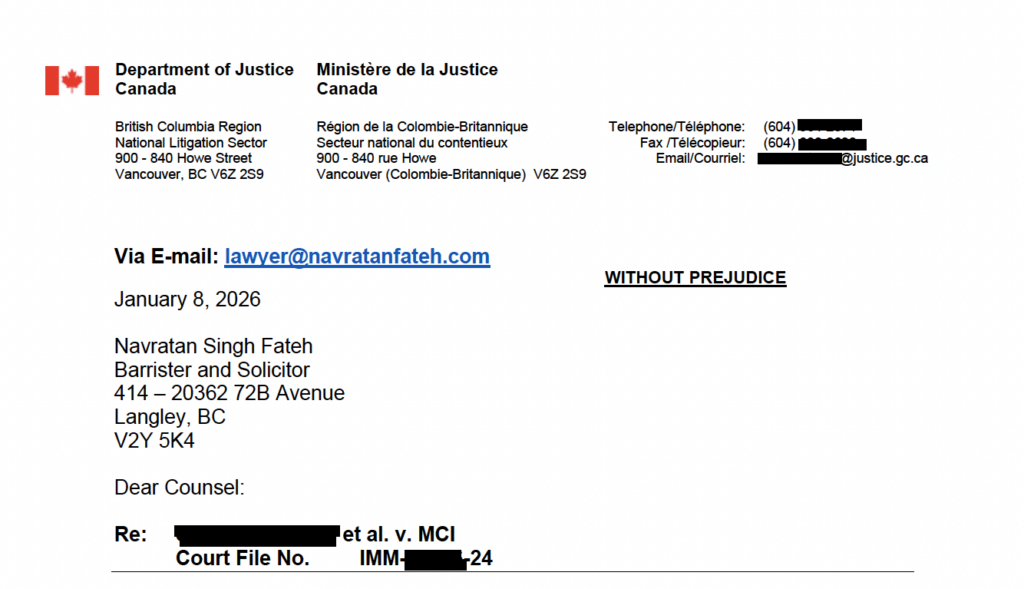
On January 8, they offered a settlement, which we accepted on behalf of our client.
As a result:
- The unreasonable refusal has been set aside
- The matter will be reconsidered lawfully
- Our client now has a fair opportunity to obtain justice under the correct legal framework
Why Choose Fateh Law Corporation?
At Fateh Law Corporation, we focus on litigation-driven immigration strategy. We do not simply reapply — we hold decision-makers accountable.
✔ Over 12 years of litigation experience
✔ Extensive Federal Court practice
✔ Proven success in challenging wrongful refusals
✔ Deep understanding of administrative and immigration law
We routinely represent clients in cases involving:
- Spousal open work permit refusals
- Visitor visa refusals
- LMIA and work permit refusals
- Residency obligation and PRTD matters
- Judicial reviews and reconsideration refusals
Don’t Accept an Unlawful Refusal as Final
If your application was refused based on:
- Incorrect financial requirements
- Misapplied LICO thresholds
- Unwritten or unpublished criteria
You may have strong grounds to challenge the decision.
📞 Contact Fateh Law Corporation today to assess your refusal and determine whether judicial review is the right path forward.
When the law is misapplied, justice begins with the right legal team.