

Why Wrongful Refusals Are Increasing — and How Fateh Law Corporation Challenges Them
Canadian Temporary Resident Visa (TRV) refusals are rising, but what is more troubling than the numbers is how many applications are being refused: by ignoring crucial evidence already on file. Families, business visitors, and genuine travelers are receiving vague refusal letters that do not meaningfully engage with the documents they carefully submitted.
This is not an isolated issue. It is a systemic problem that has now been formally raised at the national level.
A National Warning to IRCC: Evidence Is Being Ignored
On December 9, 2025, the Canadian Immigration Lawyers Association issued a formal letter to Immigration, Refugees and Citizenship Canada (IRCC), calling for:
- Improved training of visa officers
- Better decision-writing standards
- Proper assessment of evidence already submitted
The concern was clear: officers are increasingly refusing applications without addressing key documents, relying instead on generic, boilerplate language.
What Evidence Is Commonly Ignored?
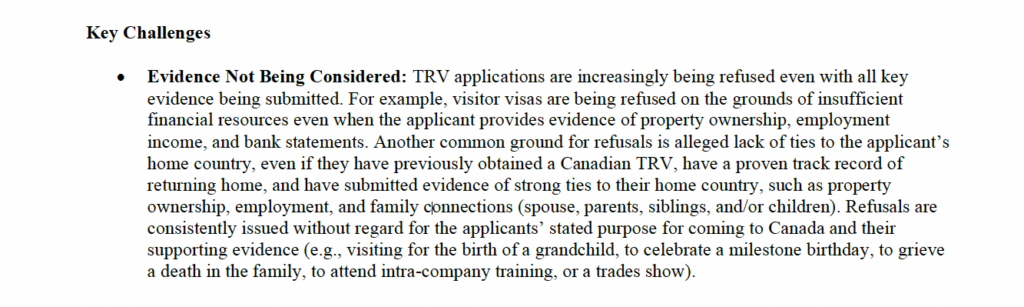
At Fateh Law Corporation, we regularly see refusals where officers fail to assess:
- Property ownership documents
- Stable employment letters
- Declared income and tax records
- Bank statements showing sufficient funds
- Strong travel history, including prior compliant travel to Canada
- Family ties in the home country, such as spouse, children, parents, and siblings
Despite this evidence, applicants are often told they lack ties to their home country — even when the record clearly shows otherwise.
“Purpose of Visit” — The Most Misused Refusal Ground
One of the most common and vague refusal reasons is:
“I am not satisfied that the purpose of the visit has been established.”
This reasoning is often used even when the applicant clearly explained their intent, such as:
- Visiting a newborn grandchild
- Attending a milestone birthday or family event
- Grieving the loss of a loved one
- Attending company training, conferences, or trade shows
- Short-term family visits with a defined return plan
When officers ignore these explanations without analysis, the refusal becomes legally vulnerable.
The Real Problem: No Meaningful Reasons
A refusal letter must allow an applicant to understand:
- Why their application was refused
- What evidence was found insufficient
- How the decision was reached
When IRCC uses boilerplate templates without reasoning, applicants are left guessing. Reapplying without knowing what went wrong often leads to repeat refusals, not approvals.
Why the Federal Court Matters
The Federal Court of Canada plays a critical role in correcting wrongful refusals.
When a refusal is challenged:
- IRCC must justify the decision through the Department of Justice
- The government cannot add new reasons after the fact
- Decisions with ignored evidence or insufficient reasoning are frequently overturned
This is why lack of reasons and boilerplate refusals are among the strongest grounds for judicial review.
Ironically, this pattern is now increasing litigation and burdening the Federal Court — something that could be avoided if evidence were properly assessed at the outset.
How Fateh Law Corporation Builds Stronger Applications
At Fateh Law Corporation, we approach every TRV application with Federal Court scrutiny in mind from day one.
1. Canadian Affidavits (Not Just Cover Letters)
A well-drafted Canadian affidavit carries greater evidentiary weight than a standard cover letter. It transforms your personal explanation into sworn evidence that officers are expected to assess seriously.
2. Legal Submissions by a Barrister & Solicitor
We provide structured legal submissions, supported by law and jurisprudence. Submissions from counsel matter because lawyers are officers of the court, and their arguments carry evidentiary value.
3. Strategic Refusal Challenges
When IRCC ignores evidence, we do not recommend blind reapplications. We evaluate whether a judicial review is the correct legal response and act within strict Federal Court deadlines.
Multiple Refusals Are a Warning Sign — Not the End
If you have faced:
- Multiple visitor visa refusals
- Generic refusal language
- Ignored documents
- No clear explanation of what went wrong
It is time to change strategy, not simply reapply.
Contact Fateh Law Corporation
Wrongful refusals undermine confidence in the immigration system — but they can be challenged.
Fateh Law Corporation represents clients worldwide in:
- Challenging TRV refusals
- Federal Court judicial reviews
- Complex visitor visa and family visit cases
📩 If your evidence was ignored, contact Fateh Law Corporation today.
When IRCC refuses to explain itself, we make them answer in court.