



Families should not have to beg to be together in moments of medical crisis. Yet, in today’s Canadian immigration landscape, even the most genuine emergency visitor visa applications are being refused—sometimes repeatedly—without meaningful consideration of humanitarian realities.
This blog tells the story of one such case handled by Fateh Law Corporation, and more importantly, explains how and why Federal Court litigation can become the only path to justice when Immigration fails to act reasonably.
A Father, a Critically Ill Son, and Five Visitor Visa Refusals
Our client was a father whose son in Canada was critically ill and required immediate care and emotional support. Like many parents in similar situations, he did everything he could from afar—constant phone calls, video chats, and coordination with family in Canada. But none of that replaces a parent’s physical presence when a child’s health is at risk.
The application was filed under the Emergency Visitor Visa / Humanitarian and Compassionate (H&C) category—precisely the type of case this category is meant to address.
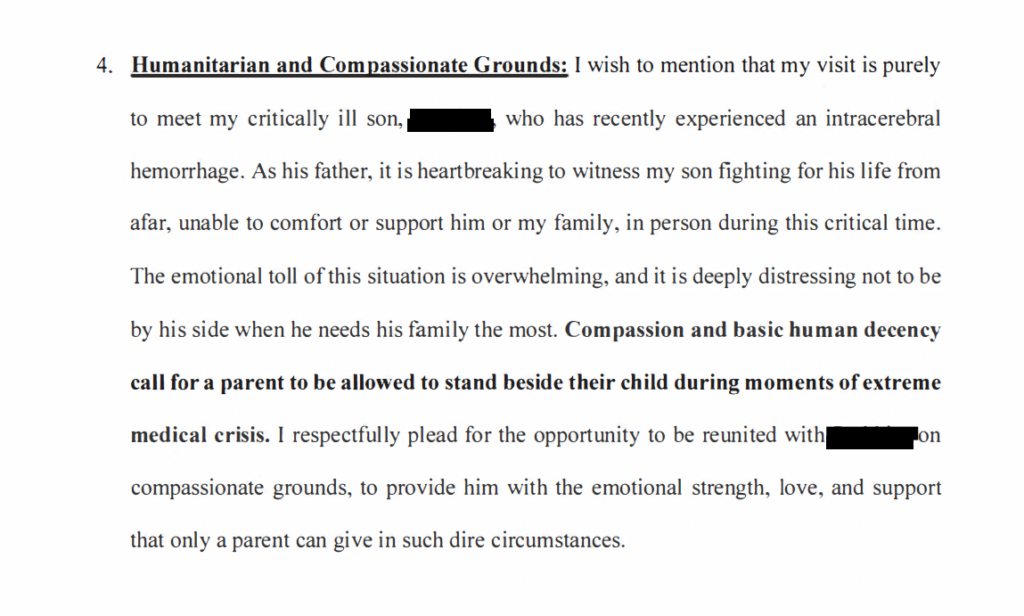 Yet, Immigration refused the application.
Then refused it again.
And again.
By the time the matter reached Fateh Law Corporation, the client had already faced four refusals. Believing in the strength and humanity of the case, our firm took the matter pro bono. Despite submitting a carefully prepared fifth application with detailed humanitarian evidence, Immigration issued yet another refusal.
At this point, the issue was no longer about missing documents or credibility—it was about systemic unreasonableness.
When Immigration Fails, the Federal Court Becomes Essential
Canadian immigration officers are required to make reasonable, fair, and humane decisions, especially in emergency and humanitarian cases. Unfortunately, lack of resources, excessive caseloads, or rigid decision-making often lead to outcomes that defy common sense.
This is exactly why Parliament created judicial oversight through the Federal Court of Canada.
When all administrative options were exhausted, we challenged the refusal by filing an Application for Judicial Review. This step fundamentally changed the trajectory of the case.
Once a case reaches the Federal Court:
- Immigration decisions are reviewed for reasonableness
- The matter is assessed by lawyers at the Department of Justice, not just the original visa office
- Officers are required to justify their decision against Canadian law, policy, and jurisprudence
In emergency cases, this scrutiny often exposes how inadequately the humanitarian factors were assessed.
A Settlement and an Urgent Reopening
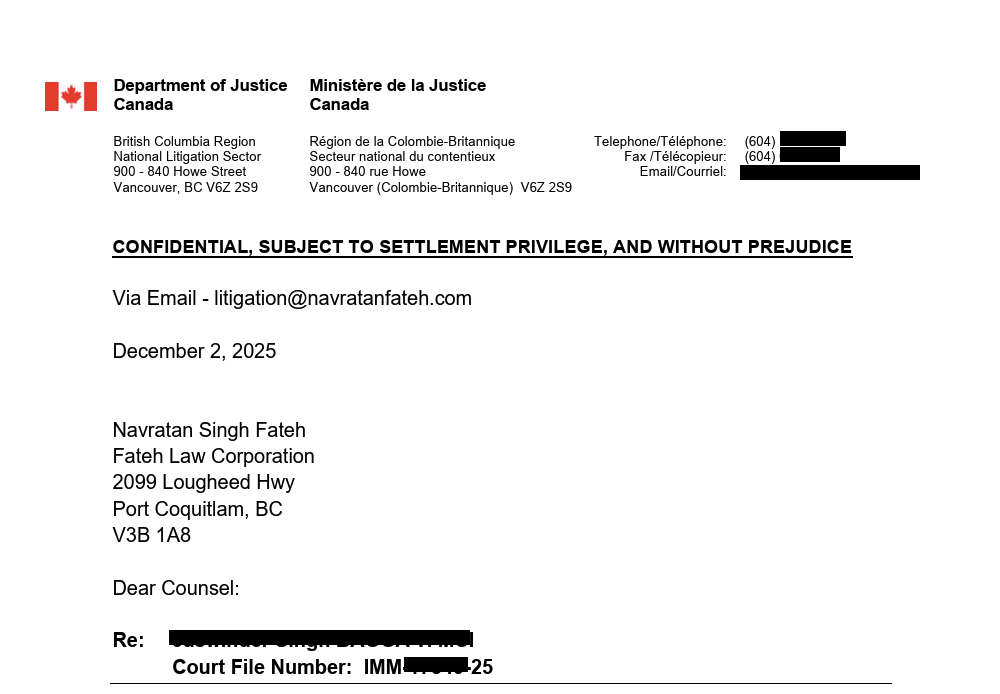
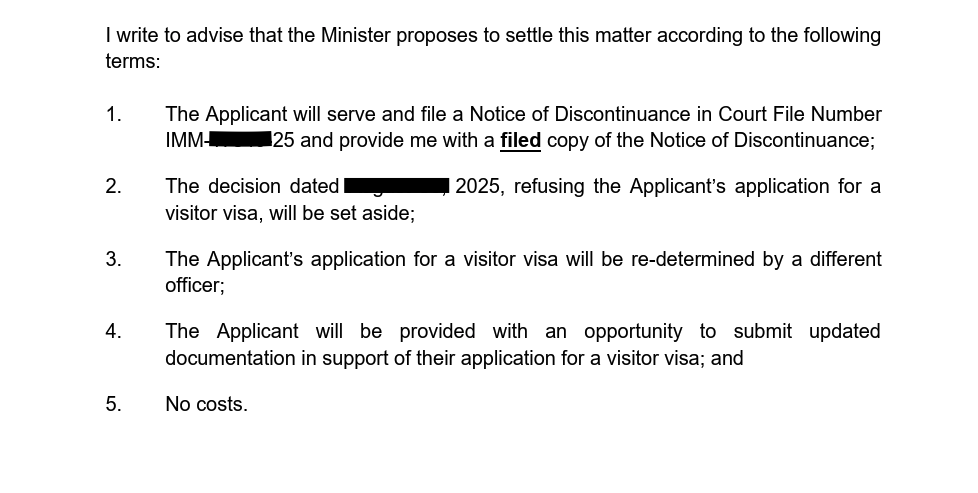 Following the Federal Court challenge, the Department of Justice agreed to a settlement. This meant Immigration accepted that the refusal could not stand as-is and that the application needed to be reconsidered.
Given the time-sensitive medical emergency, Fateh Law Corporation formally requested that the file be reopened and reassessed urgently. As a result, Immigration issued an additional document request, and updated medical and supporting documents are now being submitted.
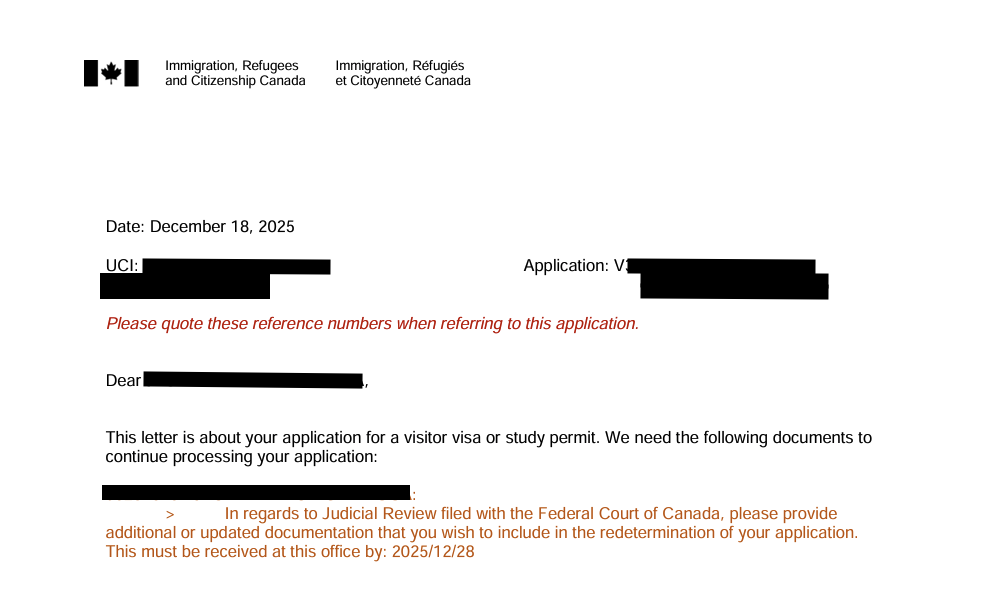 This development would not have occurred without Federal Court litigation.
The Bigger Problem: Emergency Visas Still Being Denied
This case highlights a troubling reality:
Even in genuine emergency and humanitarian cases, Immigration often does not act with the urgency or compassion the law requires.
Visitor visas for parents of critically ill children should not require:
- Multiple refusals
- Pro bono litigation
- Federal Court intervention
Yet, increasingly, only court pressure forces meaningful reconsideration.
A judicial review:
- Preserves your legal rights
- Stops unreasonable decision-making from becoming final
- Forces Immigration to involve senior decision-makers and government lawyers
Why Choosing a Federal Court–Experienced Lawyer Matters
Many applicants are advised to simply “reapply” or “wait” after refusals. In emergency cases, this advice can be devastating.
At Fateh Law Corporation, our practice is built around:
- Federal Court litigation
- Strategic reconsideration requests
- Humanitarian and compassionate advocacy
- Urgent relief in time-sensitive cases
We do not just submit applications—we prepare cases as if they may be reviewed by a judge, because often, that is exactly what is required to achieve justice.
A Fight That Continues—With Hope
This fight has been long and emotionally draining for the family involved. But it also shows what is possible when unjust and unreasonable refusals are challenged properly.
Fateh Law Corporation remains hopeful that this father will soon be reunited with his son in Canada, where he belongs—by his child’s side.
Facing Repeated or Unfair Visa Refusals?
If you or a loved one is dealing with:
- Multiple visitor visa refusals
- Emergency or medical travel needs
- Humanitarian and compassionate circumstances
- Unreasonable immigration decisions
Do not give up.
You may only have 15 days (inside Canada) or 60 days (outside Canada) to challenge a refusal in the Federal Court.
Fateh Law Corporation is here to fight for you—when it matters most.