

In the current immigration climate, even a small mistake by IRCC can have devastating consequences for international students. This recent case handled by Fateh Law Corporation is a clear example of how a legally incorrect refusal pushed a student out of status — and how timely judicial review in the Federal Court of Canada led to a settlement.
Background: A Study Permit Extension Refused in Error
Despite this, IRCC refused the application on the basis that the client did not submit a PAL (Provincial Attestation Letter).
This refusal was legally incorrect.
- A student is extending their study permit, and
- The student is continuing the same course at the same institution
Conflicting Advice and the Risk of Waiting
- Some suggested filing only a reconsideration
- Others advised applying only for restoration of status
While these options can sometimes help, neither guarantees a decision — and both can take months with no response. Meanwhile, the client remained out of status.
A Strategic Three-Pronged Legal Response
- Judicial Review in the Federal Court of Canada
Because the refusal was issued inside Canada, the client had 15 days to challenge the decision. - Restoration of Status Application
- Reconsideration Request to IRCC
Critical Timelines in the Case
- September 12 – Study permit extension refused
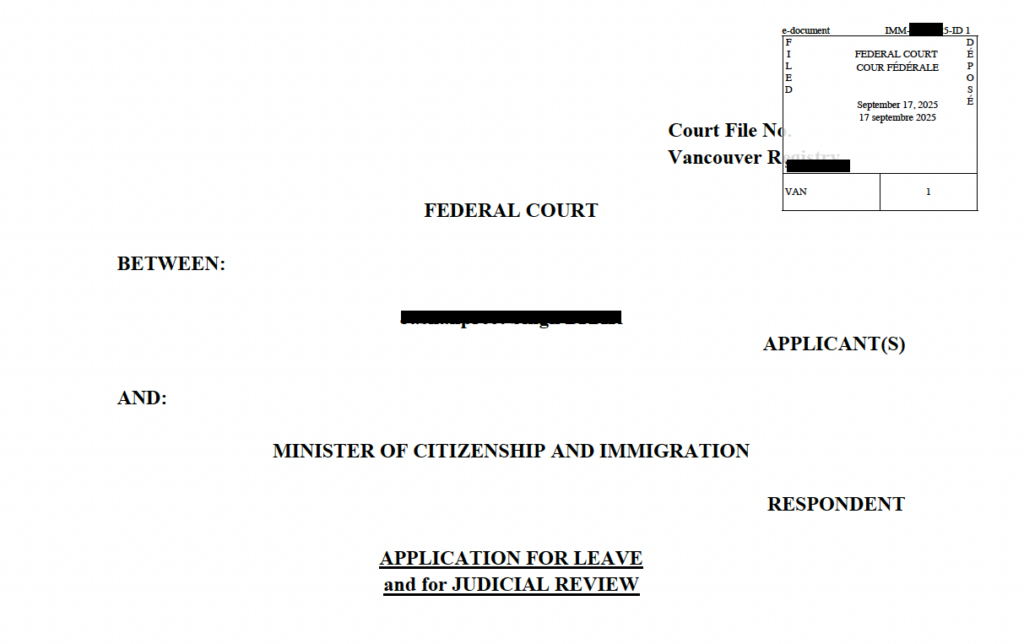
- September 17 – Judicial Review filed in the Federal Court of Canada
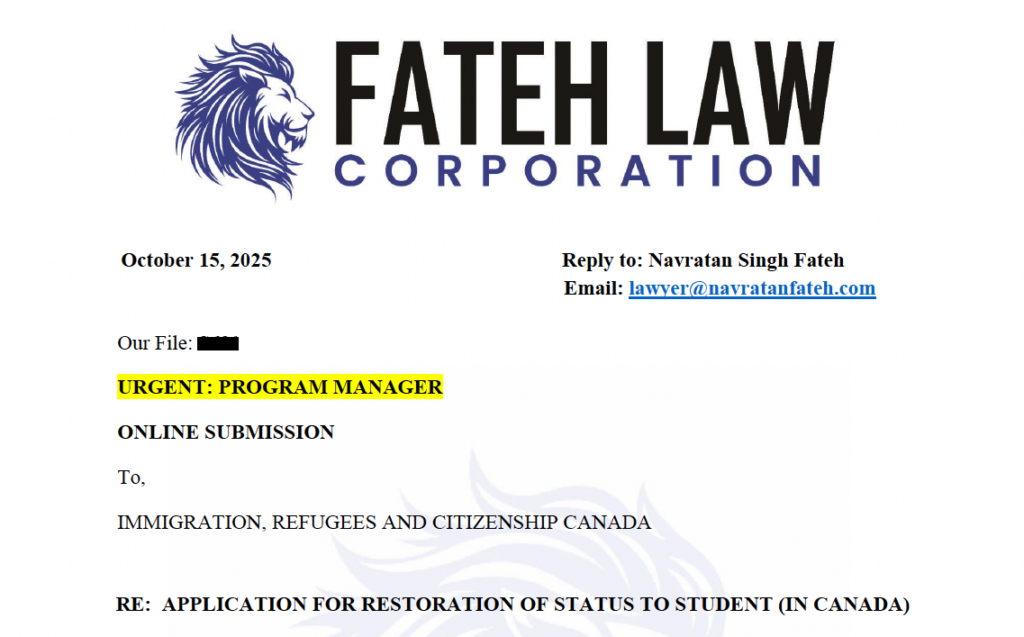
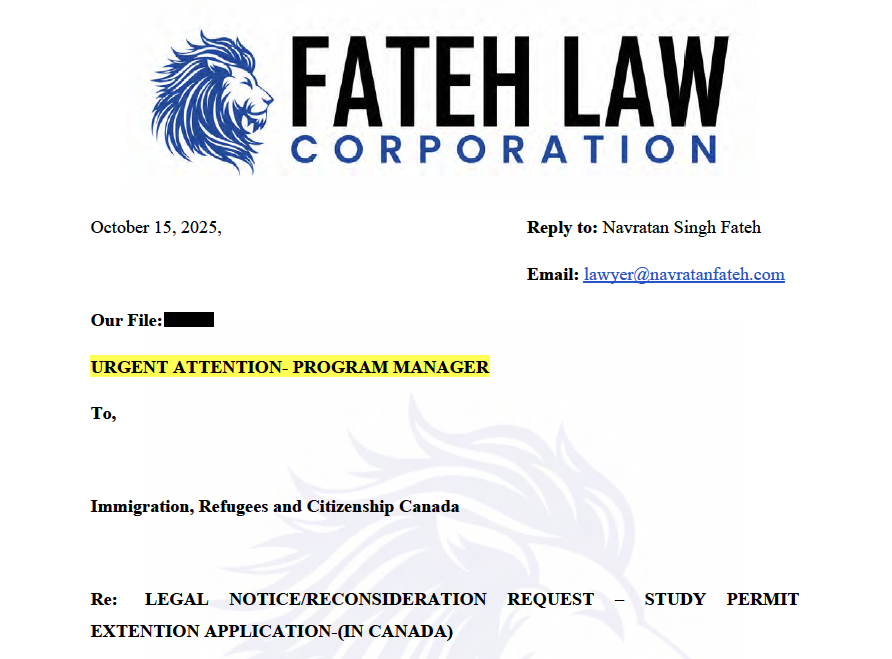
- October 15 – Restoration and reconsideration filed
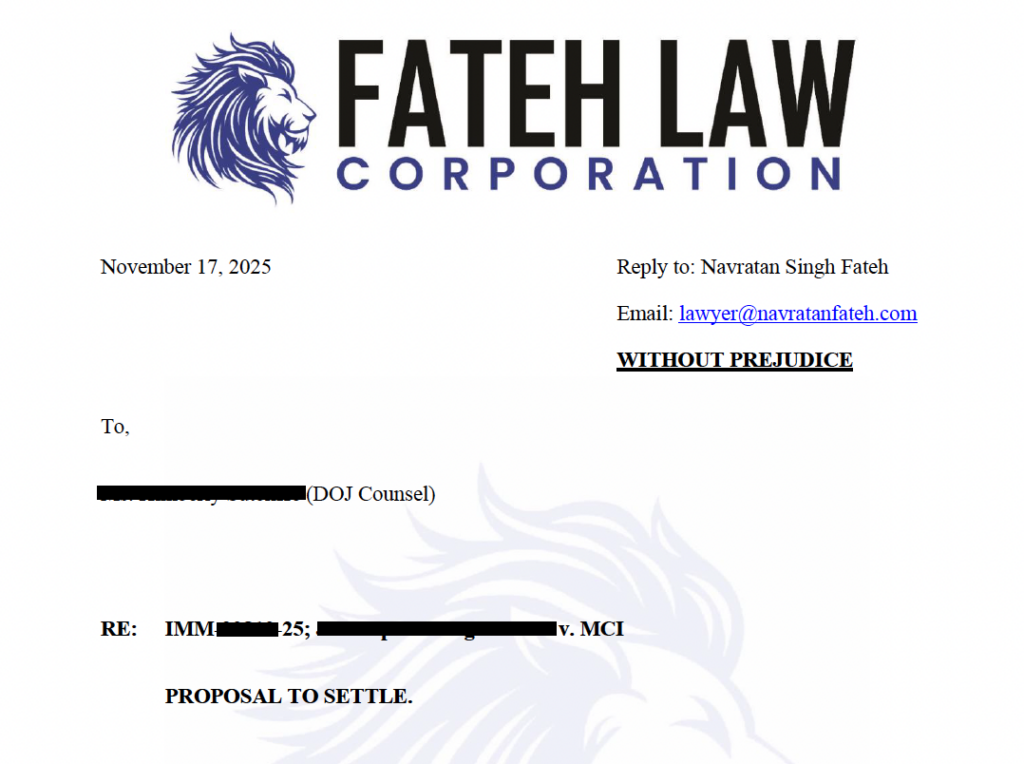
- November 17 – Formal settlement invitation sent to the Department of Justice
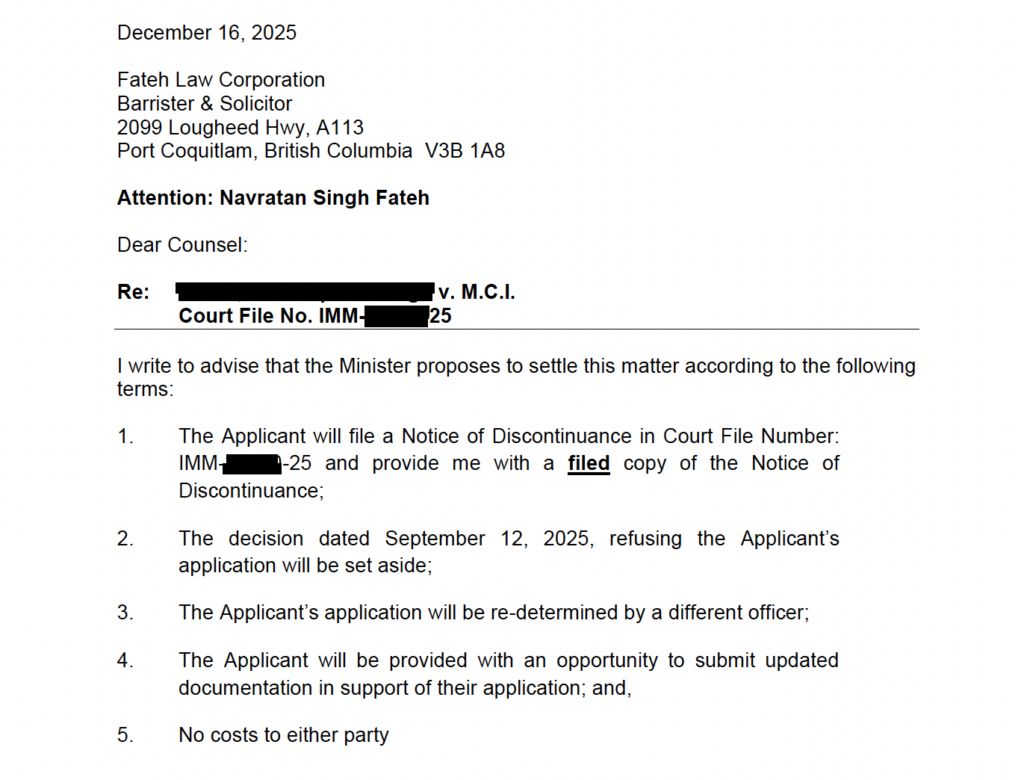
- December 16 – Settlement proposed
Litigation Changed the Power Dynamic
- Detailed legal submissions
- A sworn affidavit from the client
- Clear evidence showing that the PAL requirement was misapplied
Why Judicial Review Made the Difference
This case highlights a crucial reality:
- Forces accountability
- Creates enforceable deadlines
- Engages the Department of Justice
- Shifts the balance of power back to the applicant
What Happens Next
- The client’s overstay will be regularized
- The wrongful refusal will be set aside
- The study permit extension will be granted
- The client can finally complete his education in Canada
Key Takeaways for Students Facing Refusals
- Not all refusals are lawful
- IRCC errors are increasing
- Reconsideration and restoration alone may not be enough
- Judicial review has strict deadlines — missing them can cost you your case
Final Thoughts
Refusals may be on the rise, but your legal rights remain intact.
- The power of judicial review
- The importance of early legal strategy
- The value of having a barrister and solicitor who can represent you in the Federal Court
When the system fails, the fight for justice may be difficult — but it is often worth fighting.