


For many families in India, December is the most emotional time of the year. Winter vacations, Christmas, and New Year are moments when parents want to see their children, siblings want to reunite, and families simply want to spend time together in Canada.
Unfortunately, this is also the time when Canada visitor visa refusals are at their peak.
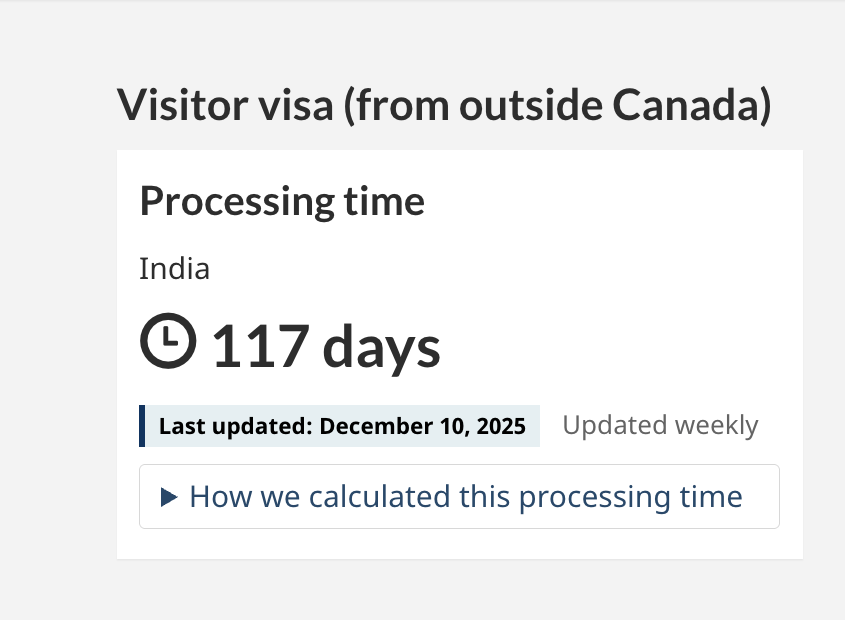 Over the last few years, refusal rates for Temporary Resident Visas (TRVs) have increased significantly. The reasons are not always about the genuineness of applicants. In reality, the current immigration climate, political pressure, and policy uncertainty have made approvals far more difficult, even for strong and genuine cases.
If you or your family members have faced multiple visitor visa refusals, continuing to reapply without changing your strategy can permanently damage your immigration record. This is where a legal, court-ready approach becomes critical.
Below are the top three legal principles we advise every applicant to follow before reapplying.
1. Prepare Your Case for Federal Court From the Very First Application
This is the most misunderstood aspect of Canadian immigration law.
When a visitor visa is refused, many people believe they can “fix things later” by adding more documents if they go to court. That is incorrect.
In a judicial review before the Federal Court of Canada:
- ❌ You cannot introduce new evidence
- ❌ You cannot correct mistakes later
- ✅ The Court only reviews what the visa officer had before them at the time of refusal
This means your initial application is the foundation of your entire legal case.
If your file is poorly prepared, lacks legal explanation, or does not address the real concerns of the officer, your chances in Federal Court are severely limited, no matter how genuine you are.
That is why applicants with prior refusals should hire a Canadian barrister from the start, not after things go wrong. A lawyer prepares the file as if it will be reviewed by a judge, not just an officer.
2. Reapply With Legal Submissions and Relevant Case Law
Most visitor visa applications are refused with short, templated reasons such as:
- Lack of ties to the home country
- Purpose of travel not justified
- Risk of overstay
What many applicants do not realize is that visa officers are legally bound by Federal Court jurisprudence. However, officers are not required to research case law on your behalf.
This is where legal representation makes a critical difference.
When a visitor visa is filed through a Canadian barrister:
- Legal submissions explain how the law applies to your specific facts
- Relevant Federal Court decisions are cited
- Officers are reminded of binding judicial principles they must follow
Many refusals occur simply because the application does not guide the officer legally. Forms alone do not argue the law. Lawyers do.
A properly drafted submission can often prevent a refusal altogether by addressing concerns before they turn into negative findings.
3. Your Affidavit Matters More Than You Think
A very common mistake we see is this:
- Applicants submit a strong inviter’s affidavit
- But submit little or nothing from the applicant themselves
If the matter goes to the Federal Court, the case is filed in the applicant’s name, not the inviter’s. This means your affidavit carries greater legal importance.
An applicant’s affidavit:
- Explains personal circumstances
- Clarifies travel purpose in the first person
- Addresses refusals directly and transparently
- Becomes sworn evidence reviewed by a judge if needed
At Fateh Law Corporation, we prepare Canadian-standard affidavits for applicants residing in India, specifically drafted to withstand Federal Court scrutiny. These affidavits are not generic letters—they are legal evidence.
Why Reapplying Without a Legal Strategy Can Be Risky
Each refusal adds to your immigration history. Multiple refusals without addressing legal weaknesses can:
- Reinforce negative credibility findings
- Make future approvals more difficult
- Reduce the effectiveness of a Federal Court challenge
If your case is genuine, repeating the same approach is not the solution. Changing the strategy is.
A properly prepared application:
- Anticipates officer concerns
- Is structured for judicial review if needed
- Maximizes the chances of overturning a refusal through the courts
Final Thoughts: Don’t Give Up—Rebuild Strategically
Canada’s immigration system has changed. Approval rates are lower, scrutiny is higher, and genuine applicants are often caught in the middle.
If you are facing multiple visitor visa refusals, the answer is not to give up—but to reapply with legal precision.
📞 Contact Fateh Law Corporation for a paid consultation
We help clients in India and abroad rebuild visitor visa applications from the ground up, with Federal Court strategy in mind, so that every document submitted strengthens—not weakens—your case.
Reapply once. Reapply correctly. Reapply with the law on your side.